
Quick answer
Most adult cats fit comfortably in a small urn of about 15 to 25 cubic inches, based on the guideline of roughly 1 cubic inch per pound of body weight. Choose wood or ceramic for keeping at home, or a biodegradable urn for burial, and add a name, photo or paw print to make it personal.
Cats have a way of making a home feel complete, and losing one leaves a quiet that is hard to describe. Choosing among cat urns for ashes is one small way of keeping that presence close.
This gentle guide explains what size most cats need, how the main materials compare, and how to personalize an urn so it feels like your cat’s own. It also covers keepsakes for sharing ashes and natural burial options. Read it in your own time; there is no need to decide anything today.
Starting Gently
If your cat has only recently died, an urn may not be the first thing on your mind. The ashes are usually returned in a sealed bag inside a simple temporary container, and they can stay there safely for as long as you need.
Some people like to choose an urn straight away, as it gives them something practical and loving to focus on. Others wait weeks or months. Both are completely normal. If your cat passed at home and you are unsure what to do in the first hours, our guide on what to do when your cat dies at home walks through each step calmly.
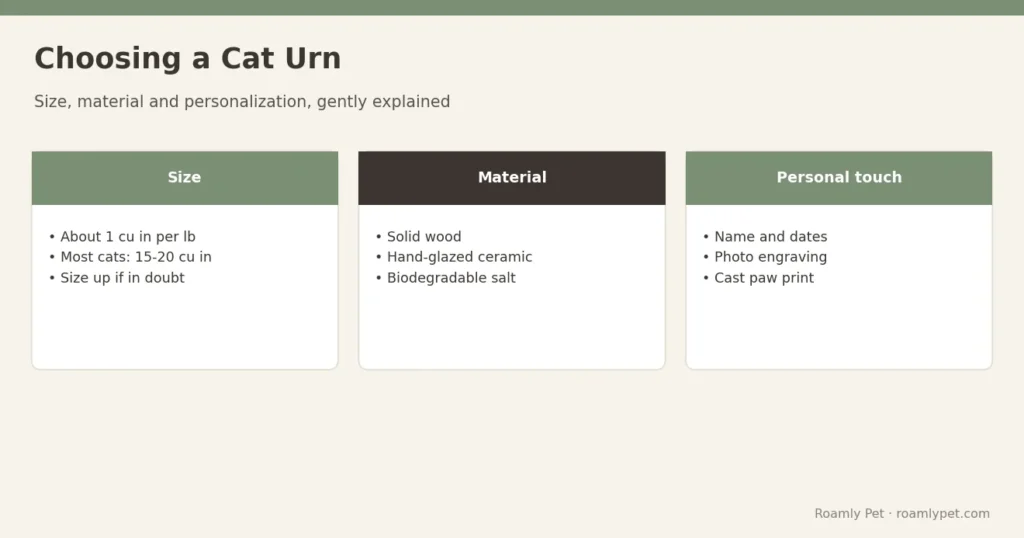
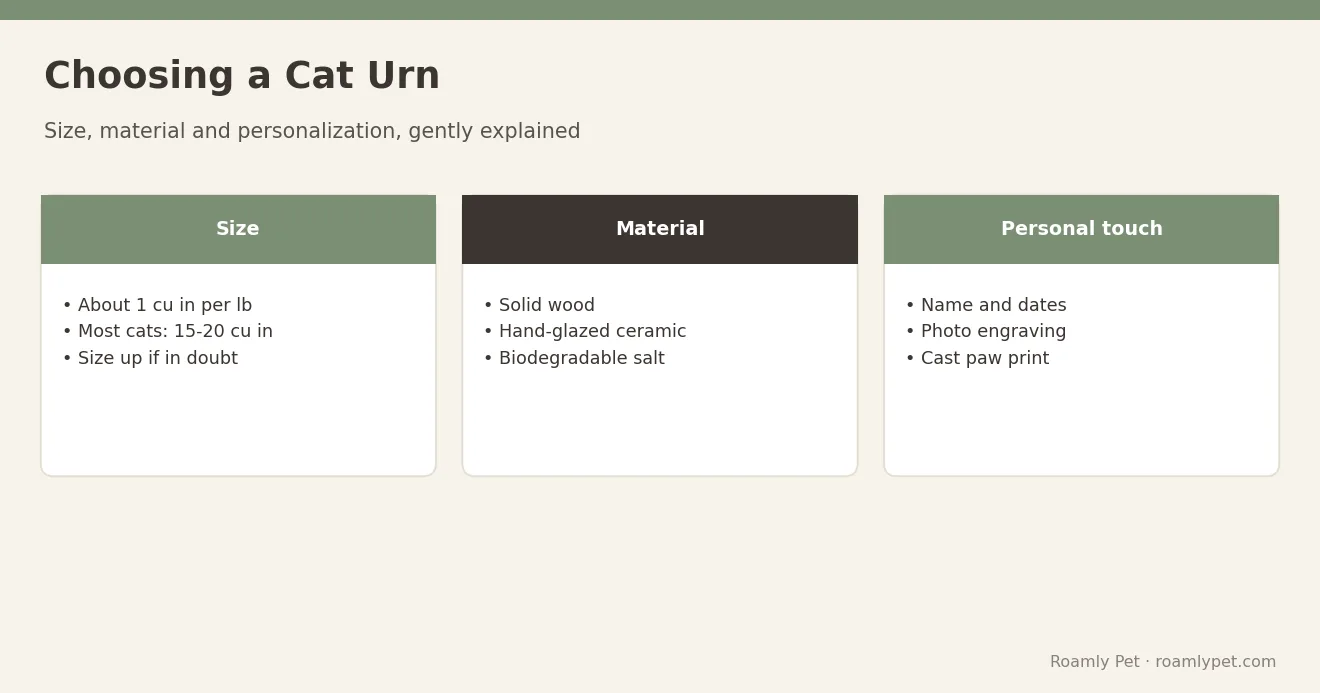
When you do feel ready, the choice comes down to three things: size, material and personalization. The sections below take each in turn.
What Size Urn Does a Cat Need?
The usual guideline is about 1 cubic inch of urn capacity per pound of your cat’s healthy body weight. Because cats are fairly consistent in size, most fit a small urn comfortably.
| Cat weight | Suggested capacity | Typical cats |
|---|---|---|
| Up to 8 lb | About 10–15 cubic inches | Petite and senior cats |
| 9–15 lb | About 15–20 cubic inches | Most adult domestic cats |
| 16–25 lb | About 25–30 cubic inches | Large breeds such as Maine Coons |
If your cat lost weight during illness, use their healthy adult weight. When your cat sits near the top of a range, choose the next size up. A little extra room makes it easier to place the bag of ashes inside and close the urn securely.
Cat Urns for Ashes: Comparing Materials
Cat urns come in several materials, each with its own character:
- Solid wood: warm and natural, with visible grain. Engraving shows clearly, and wooden urns suit bookshelves and quiet corners.
- Hand-glazed ceramic: smooth and decorative, with subtle variations from the glazing process. Ceramic suits a windowsill or mantel where it can catch the light.
- Biodegradable salt: designed to break down in soil or water, for families who plan to bury the ashes or place them in water.
For keeping your cat’s ashes at home, wood and ceramic are the most common choices. The decision often comes down to which style feels most like your cat and which suits your home. A calm, earthy wood might suit a gentle old cat, while a glossy ceramic might reflect a bright, playful one.
Personalizing a Cat Urn
A few personal details can make an urn feel unmistakably your cat’s. Options vary by product, but commonly include:
- An engraved name and dates, perhaps with a nickname.
- A short line, such as Forever our girl, or the name of their favourite sunny spot.
- A laser-engraved photo of your cat’s face.
- A cast paw print as a symbolic touch.
For photo engraving, choose a sharp, well-lit image with good contrast. Cats with very dark or very pale coats look best against a contrasting background. Use the original file rather than a screenshot, and avoid heavy filters.
Keep engraved text short on a small urn so it stays clear and balanced. Reading it aloud and asking someone else to proofread before ordering is always worthwhile.
Biodegradable Options for Natural Burial
Some families prefer to return their cat to the garden or to a favourite outdoor place. A biodegradable urn is designed for exactly this, breaking down gradually in soil or water and leaving no lasting container.
Roamly Pet offers a biodegradable cat urn for ashes made from salt, which can be used for burial in soil or placed in water. Before burying or placing ashes anywhere, check local rules, which vary by country and local authority. If you rent your home, ask the owner before burying anything in the garden.
Many families also plant something over the spot, such as a small shrub or a patch of catmint, so the place becomes a living memorial they can tend over the years.
Keepsakes and Sharing Ashes
When a cat was loved by several people, sharing ashes can bring comfort to everyone. A simple way to approach it:
- Talk with family about who would like a portion.
- Choose a main urn for most of the ashes.
- Choose small keepsakes for the remaining portions.
- Divide the ashes calmly over a tray, using a small spoon or funnel.
- Close each urn and keepsake securely.
Because cats return a fairly small amount of ash, keepsakes may hold a meaningful share. Our guide to keepsake pet urns for sharing ashes explains the options and how to divide ashes gently.
Transferring and Displaying the Urn
Many families simply place the sealed bag of ashes inside the urn without opening it, which is clean, simple and respectful. If the bag does not fit, or you are dividing ashes, you can transfer them carefully. Our guide on how to transfer pet ashes into an urn covers this step by step.
As for where to place the urn, think about where your cat liked to be: a sunny windowsill, the top of a bookcase, or near their favourite chair. Keep the urn away from direct heat and damp, and out of reach of other pets who might knock it. A photo or collar beside the urn can turn a quiet corner into a small memorial.
Finding a Fitting Urn
Roamly Pet makes personalized cat urns in solid wood and hand-glazed ceramic, as well as biodegradable salt urns for burial or water. Most styles include free name-and-date engraving, with optional photo laser-engraving or a cast paw print depending on the product. Every urn is made or engraved to order and shipped within 3 to 5 business days.
You can browse our cat urns and compare capacities with your cat’s weight. If you have a large breed, would like keepsakes, or have a question about engraving, please contact us. We are glad to help.
Frequently Asked Questions
What size urn is right for a cat?
Most adult cats weigh between about 8 and 15 lb, so an urn of around 15 to 20 cubic inches usually fits. Large breeds may need 25 to 30 cubic inches. Use the guideline of about 1 cubic inch per pound, and choose the next size up if you are close to the limit.
Can I put the bag of ashes straight into the urn?
Yes, and many families prefer to. Ashes are usually returned in a sealed bag, which can be placed directly inside the urn if it fits. This avoids handling the ashes. If the bag is too large for the opening, you can transfer the ashes carefully using a funnel.
Is a wooden or ceramic urn better for a cat?
Neither is better; they simply feel different. Solid wood is warm and natural and engraves clearly. Hand-glazed ceramic is smooth and decorative, with subtle variations in each piece. Choose the one that suits your cat’s personality and the place in your home where the urn will rest.
Can I bury my cat’s ashes in the garden?
In many places, burying ashes on your own land is permitted, but rules vary by country and local authority, so check first. A biodegradable urn is designed to break down naturally in soil. If you rent, ask the owner, and consider whether you might move house in future.
How long does a personalized cat urn take to arrive?
Roamly Pet urns are made or engraved to order and shipped within 3 to 5 business days. Delivery time after dispatch depends on your location and carrier. Meanwhile, the ashes are perfectly safe in the temporary container provided by your cremation provider.