
Quick answer
Wooden pet urns offer a warm, natural look and show engraving and photos with clear contrast. Ceramic pet urns are smooth, glossy and decorative, with each hand-glazed piece slightly unique. Both protect ashes well indoors. Choose wood for a classic, homely feel, or ceramic for colour and a polished finish that suits display.
When families compare wooden vs ceramic pet urns, they are rarely asking which is objectively better. They are asking which one feels like their pet, and which they will be glad to see on a shelf for years to come.
This guide compares the two side by side: how they look, how personalization appears on each, how they hold up, how to care for them and where they display best. By the end, you should have a clearer sense of which suits your pet, your home and your plans for the ashes.
Wooden vs Ceramic Pet Urns at a Glance
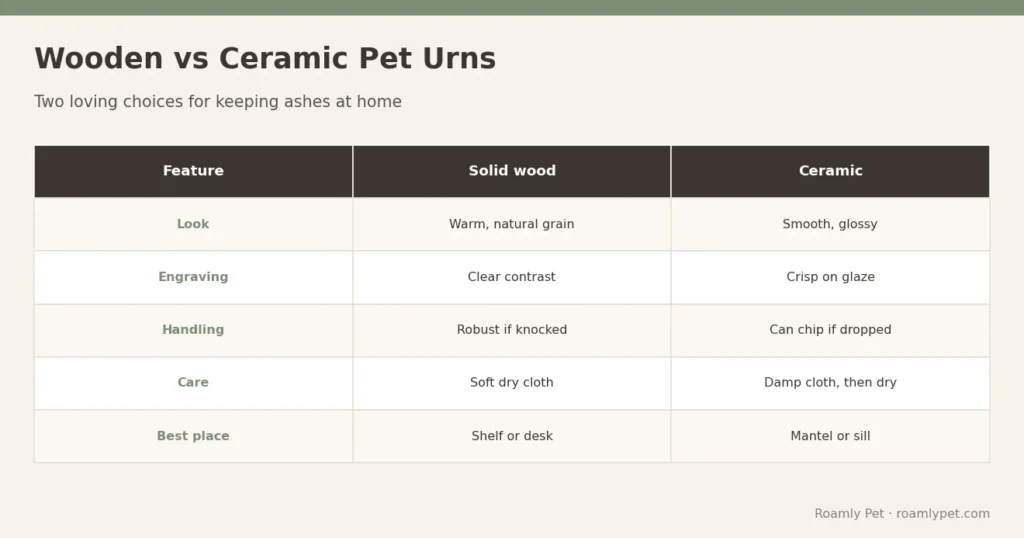
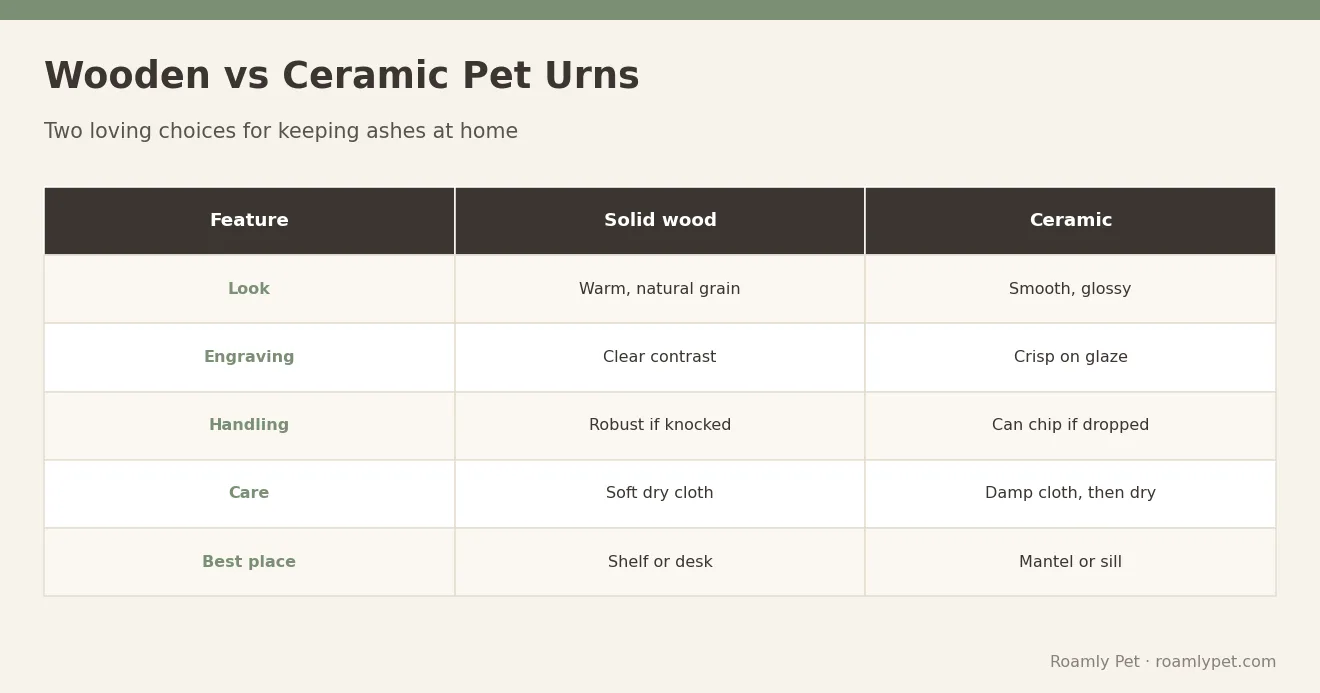
Here is a quick comparison of the main differences. Individual designs vary, so always check the product details.
| Feature | Solid wood | Hand-glazed ceramic |
|---|---|---|
| Look | Warm, natural grain | Smooth, glossy, often coloured |
| Feel | Homely and classic | Decorative and polished |
| Engraving | Clear contrast; suits detailed photos | Crisp against the glaze |
| Uniqueness | Grain differs on every piece | Glaze varies slightly on every piece |
| Handling | Robust if knocked | Can chip or break if dropped |
| Best place | Shelf, bookcase, desk | Mantel, windowsill, display cabinet |
Both are made for keeping ashes at home. If you plan to bury or place ashes in water, a biodegradable urn is the better choice.
The Character of Wooden Urns
Solid wood urns have a timeless, grounded feel. The natural grain means no two are quite alike, which many families find fitting for a pet who was entirely their own.
Reasons people choose wood:
- A warm, natural look that blends with most homes.
- Engraving shows with clear, natural contrast, so names and photos stand out.
- Wood is robust and less likely to be damaged if the urn is bumped.
- It suits quiet, understated memorial spaces such as bookshelves and desks.
Wood often appeals to people whose pet loved the outdoors: long walks in the woods, afternoons in the garden, or naps on a sun-warmed deck. It can also suit a home with wooden furniture, where the urn sits naturally alongside familiar things.
The Character of Ceramic Urns
Hand-glazed ceramic urns are smooth, often glossy and frequently coloured. Because each piece is glazed by hand, there are subtle variations in tone and finish, so each urn is a little unique.
Reasons people choose ceramic:
- A decorative look that sits comfortably among vases and ornaments.
- Colour options that might reflect your pet’s coat or personality.
- A smooth surface that is easy to wipe clean.
- A polished finish that catches the light on a windowsill or mantel.
Ceramic suits families who want the urn to be quietly beautiful in its own right, so that a visitor might see a lovely piece before realising what it holds. It can feel especially fitting for a bright, characterful pet. Some families choose a glaze colour that echoes their pet’s coat, eyes or favourite collar, which can make the urn feel personal even before any engraving is added.
How Personalization Looks on Each
Most families personalize their urn, and the material affects how it appears.
On wood, laser-engraving creates a natural darker tone against the lighter grain. Names, dates and photos tend to show clearly, and fine photographic detail usually comes through well.
On ceramic, engraving and paw prints sit neatly against the glaze, giving a crisp, refined result. Short text and simple designs tend to look especially elegant on a curved ceramic surface, where a long passage can wrap awkwardly around the shape.
On both, a sharp, well-lit photo with good contrast gives the best result, and short text looks cleaner than long passages. For photo tips and wording ideas, see our guide to personalized pet urns.
Durability and Everyday Care
Both materials protect ashes well indoors. They differ mainly in how they handle knocks and in how you care for them.
Wooden urns are robust and unlikely to break if bumped, though they can scratch. Keep them away from direct heat, strong sunlight and damp, which can affect wood over time. A soft, dry cloth is usually all they need.
Ceramic urns resist fading and wipe clean easily, but can chip or break if dropped onto a hard floor. Place them on a stable, level surface away from edges, and out of reach of curious pets or young children.
For either material, avoid harsh cleaning sprays and keep the urn somewhere it will not be moved often.
Display and Home Style
Think about where the urn will live. A wooden urn tends to feel at home on a bookshelf, a desk or a side table, especially among wooden furniture. A ceramic urn can brighten a mantelpiece, a windowsill or a glass cabinet. Some families add a framed photo, a collar or a small plant nearby, creating a quiet memory corner that feels part of everyday life rather than set apart from it.
Consider, too, who shares your home. In a busy household with young children or energetic dogs, a wooden urn may be the more relaxed choice. In a calm home with a dedicated memorial spot, ceramic may be just as practical.
Size matters for display as well. Larger urns for big dogs need a sturdy surface, so check capacity against your pet’s weight with our pet urn size guide before you choose a style.
Questions to Help You Decide
If you are still unsure, these questions may help:
- Does your pet feel more like natural wood or bright glaze to you?
- Where will the urn sit, and what is around it?
- Is the space busy, with a chance of knocks?
- Would you like a detailed photo, or simply a name and dates?
- Will you keep all the ashes, or bury some in a biodegradable urn?
There is no wrong answer. Many families simply know which one feels right when they see it, and that instinct is worth trusting.
Finding a Fitting Urn
Roamly Pet makes personalized urns in both solid wood and hand-glazed ceramic, as well as biodegradable salt urns for burial or water. Most styles include free name-and-date engraving, with optional photo laser-engraving or a cast paw print depending on the product, and each urn is made or engraved to order and shipped within 3 to 5 business days.
You can compare wood and ceramic designs among our dog urns and cat urns. If you would like help choosing a material or size, or have an engraving question, please contact us.
Frequently Asked Questions
Are wooden or ceramic urns more durable?
Wooden urns are more forgiving if knocked or dropped, though they can scratch. Ceramic urns resist fading and are easy to clean, but they can chip or break on a hard floor. Indoors, on a stable surface, both protect ashes well for many years with very little care needed.
Does photo engraving look better on wood or ceramic?
Both can look lovely. On wood, engraving creates a natural darker tone that shows photographic detail clearly. On ceramic, engraving sits crisply against the glaze for a refined look. The quality of the photo matters most, so choose a sharp, well-lit image with good contrast against the background.
Can I bury a wooden or ceramic urn?
These urns are designed mainly for keeping ashes at home rather than for burial. If you plan to bury your pet’s ashes or place them in water, a biodegradable urn is better suited, as it breaks down naturally. Check local rules on burial and scattering before you go ahead.
How do I clean a wooden or ceramic pet urn?
For wood, dust gently with a soft, dry cloth and keep it away from damp and direct heat. For ceramic, wipe with a soft, slightly damp cloth and dry it afterwards. Avoid harsh sprays or abrasive cleaners on either material, as they can dull or damage the finish.
Which material suits a cat or a small dog?
Both materials work well for small pets, and the choice is mainly about style. Wood offers a warm, classic look that suits understated spaces. Ceramic gives a decorative, polished finish that suits display. Check the listed capacity against your pet’s weight, then choose the look that feels right.