

Quick answer
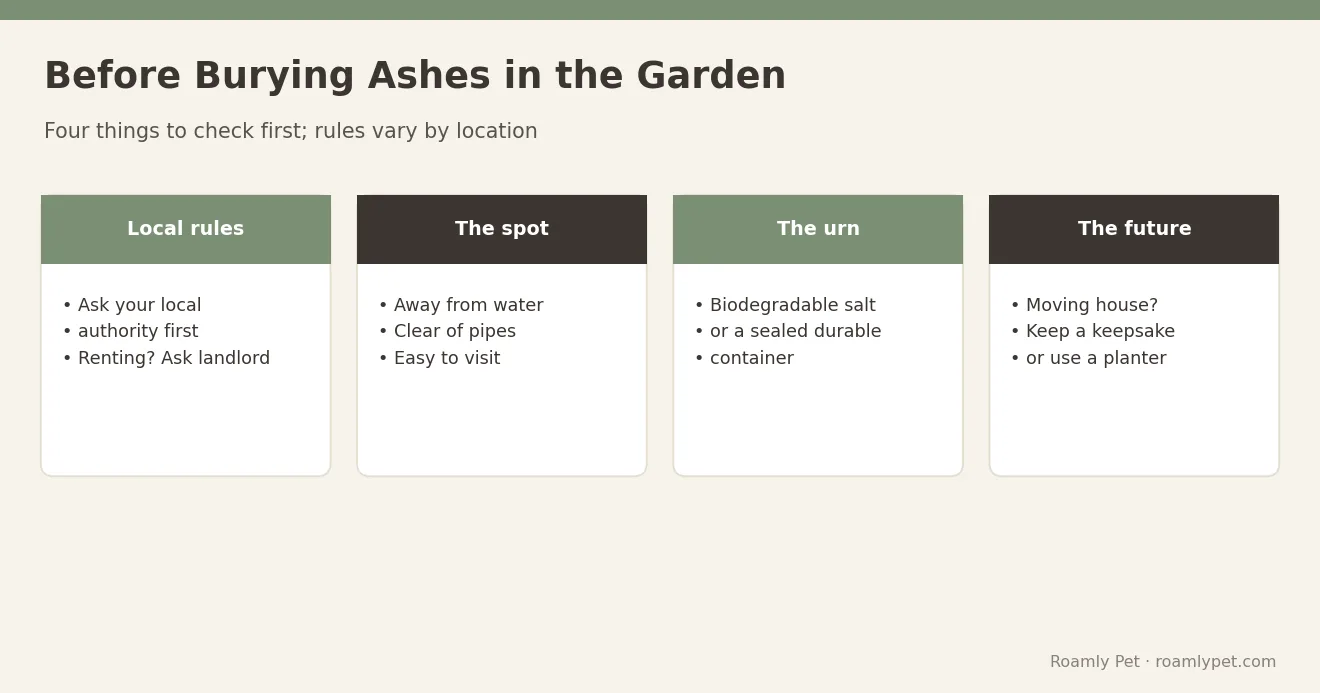
Burying pet ashes in your garden is allowed in many places, but rules vary by country, state and local council, so check with your local authority first. Choose a spot away from water sources, pipes and cables, use a biodegradable urn or a durable sealed container, and think ahead about whether you might move house in future.
Burying pet ashes in your garden is a choice many families find comforting. It keeps a beloved dog or cat close to home, in a place they may have loved, and gives you somewhere quiet to visit.
Before you begin, it helps to understand a few practical points: local rules, whether you own the land, choosing the right spot and container, and what might happen if you move. This guide covers each of these calmly, with simple steps for the burial itself. Rules differ from place to place, so treat this as general guidance and check with your local authority for anything specific to your area.
Is Burying Pet Ashes in Your Garden Allowed?
In many places, burying cremated pet remains on your own property is permitted, and it is often treated differently from burying a pet’s body. However, rules are set by national, state and local authorities, and they can change. Some areas have guidance about distance from wells, streams or drinking water, while others may have restrictions for certain property types.
The safest approach is to check with your local council, municipality or environmental authority before you dig. If you rent your home, ask your landlord for permission first, and if you live in a shared building or community with its own rules, check those too.
It is also worth knowing that burying ashes somewhere other than your own garden, such as a park, beach, woodland or a relative’s property, usually needs permission from the landowner or the relevant authority. If you would prefer a dedicated resting place, some pet cemeteries offer plots or memorial gardens for cremated remains, which can be a good choice if you rent or expect to move. Your vet or local crematorium may be able to suggest options near you.
Things to Consider Before You Decide
Burial is a lasting choice, so it is worth thinking through a few questions together as a family:
- Ownership: do you own the land, or will you need permission?
- Moving house: how would you feel about leaving the ashes behind if you move?
- Sharing ashes: would anyone like to keep a portion in a keepsake first?
- Future plans: might the area be dug up for building work, paving or new planting?
- Visiting: would you like a visible marker, or a more private spot?
If you are still deciding between keeping ashes in an urn and burying or scattering them, our guide on choosing between an urn or scattering ashes may help.
Choosing the Right Spot
Many families choose a place their pet loved: a sunny corner, a favorite resting spot under a tree, or beside a path they walked together. Practically, it helps to choose somewhere:
- away from streams, ponds, wells and drainage ditches
- clear of underground pipes, cables and septic systems
- unlikely to be dug up for future building or landscaping
- not prone to flooding or heavy waterlogging
- easy for you to visit and care for
If you are unsure what lies underground, check property plans or contact your utility providers before digging.
Choosing an Urn or Container for Burial
The container you choose shapes how the burial unfolds over time. The table below compares common options.
| Container | What happens over time | Best for |
|---|---|---|
| Biodegradable salt urn | Breaks down gradually in soil | Returning ashes naturally to the earth |
| Other biodegradable urns | Paper, sand or plant-based materials break down | Natural burial, depending on the material |
| Durable urn in a sealed container | Stays largely intact | Keeping the option to move the ashes later |
| Ashes placed directly in soil | Mix with soil immediately | Simple scattering-style burial, where allowed |
Wooden and ceramic urns are usually designed for display indoors and may not be ideal for burial without extra protection. Our biodegradable pet urns guide explains natural burial materials in more depth.
How to Bury Pet Ashes, Step by Step
- Check rules and permissions with your local authority and, if relevant, your landlord.
- Choose a calm time, perhaps when family can be present.
- Dig the hole deep and wide enough for the urn, with enough soil above it that it will not be disturbed by gardening or animals. Local guidance may suggest a depth.
- Place the urn gently at the bottom, upright if it has a top and base.
- Say a few words, read something meaningful or share memories, if you wish.
- Refill the hole, pressing the soil down gently.
- Mark the spot with a stone, plant or small plaque, if you would like.
There is no right way to hold a small ceremony. Some families light a candle, others simply stand together for a moment.
Planting and Marking the Grave
A plant, shrub or tree can turn a burial spot into a living memorial. Cremated remains are naturally alkaline and contain salts, so some gardeners prefer not to plant directly on top of a large quantity of ashes. Leaving a layer of soil between the urn and the roots, or planting slightly to one side, is a gentle compromise. A local garden center can suggest plants that suit your soil.
Markers might include a flat stone, an engraved plaque, a small statue or a ring of bulbs. For more inspiration, see our article on pet memorial garden ideas.
What If You Move House?
This is one of the most common worries. If you bury ashes in a biodegradable urn, they will gradually become part of the soil and cannot usually be moved. If you think you may move, you might consider:
- keeping a small portion of ashes in a keepsake urn before burial
- burying a durable, sealed urn that could be carefully lifted later
- creating a memorial in a large planter that can travel with you
- marking the place with a stone you could take with you
None of these choices is better than another. It simply helps to decide with the future in mind.
How Roamly Pet Can Help
For garden burial, Roamly Pet offers biodegradable salt urns designed to return ashes gently to the earth, and solid wood or hand-glazed ceramic urns for families who prefer to keep ashes at home. Most styles can be personalized with free name-and-date engraving, optional photo laser-engraving or a cast paw print, and each urn is made or engraved to order and shipped within 3–5 business days. If you are wondering which size or style would suit a burial, please ask us through our contact page.
Frequently Asked Questions
Do I need permission to bury pet ashes in my garden?
It depends on where you live. Many places allow burial of cremated pet remains on your own land, but rules are set by national, state and local authorities and can differ. Check with your local council or environmental authority, and if you rent, ask your landlord for permission before burying any ashes.
How deep should I bury my pet’s ashes?
Bury the urn deep enough that it will not be disturbed by gardening, digging animals or erosion. Some local authorities offer guidance on a suitable depth, so it is worth asking. If you plan to place a plant above, allow extra soil so the roots have room to grow without disturbing the urn.
Can I bury ashes without an urn?
In some places you can place ashes directly into the soil, mixing them gently with earth. Because ashes are alkaline, spreading them through the soil rather than leaving a concentrated pile is often recommended for plants nearby. Check local rules first, and consider whether you would like a container to mark the spot.
Will a biodegradable urn harm my garden?
Biodegradable urns are made to break down naturally in soil. The ashes themselves are alkaline and contain salts, so some gardeners prefer to plant slightly to one side of the burial spot or leave a soil layer between the ashes and roots. A local garden center can advise on plants for your soil.
What happens to buried ashes if I sell my house?
Ashes buried in a biodegradable urn become part of the soil and usually stay with the property. If you think you may move, consider keeping a keepsake portion first, burying a durable sealed urn you could lift later, or creating a memorial in a large planter. Choosing with the future in mind can bring peace of mind.