
Quick answer
The amount of ash depends mainly on your pet’s size and bone structure. A widely used guideline for urn sizing is about 1 cubic inch of capacity per pound of healthy body weight, so a 20-pound cat or dog usually needs an urn of around 20 cubic inches. It is an estimate, so choosing a little extra space is sensible.
Wondering how much ash will my pet have is a very practical question, and a common one when choosing an urn. It is also a question many people feel hesitant to ask, so please know it is entirely normal.
This guide explains the guideline most urn makers and crematoriums use, shows estimated urn capacities by weight, and describes why the actual amount can vary between pets. It also covers what to do if your pet’s weight changed during illness, and how to plan for keepsakes or companion urns. The figures here are estimates; your crematorium can tell you more once ashes are returned.
How Much Ash Will My Pet Have? The Simple Guideline
A widely used rule of thumb is about 1 cubic inch of urn capacity for every pound of your pet’s healthy body weight. In metric terms, 1 cubic inch is roughly 16 milliliters, so you can think of it as around 16 ml of capacity per pound, or about 35 ml per kilogram.
This guideline is meant for choosing an urn, not for predicting the exact amount. It includes a little room to spare in most cases, which is helpful because ashes are sealed in a bag and do not pack perfectly. If your pet sits between two sizes, choosing the larger urn is usually the safer option.
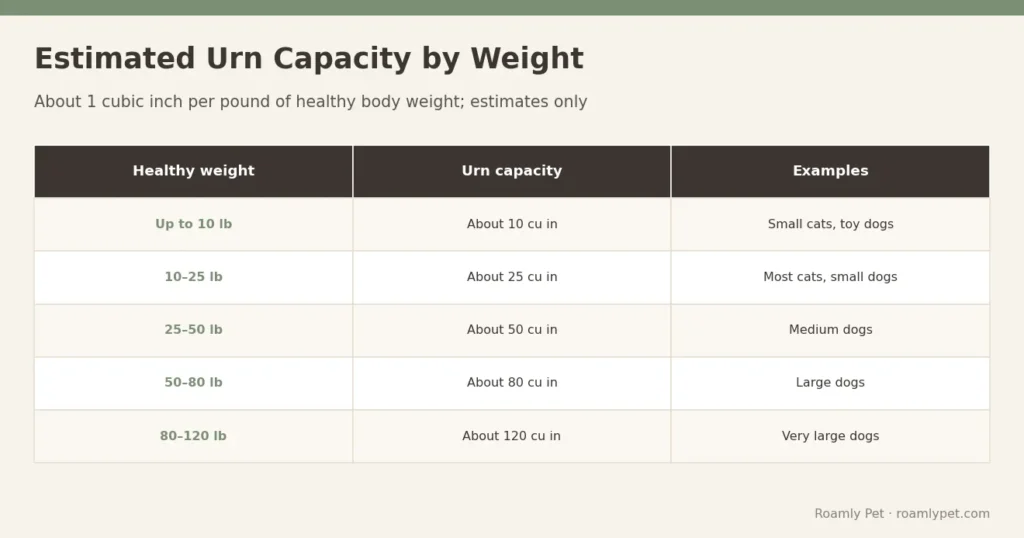
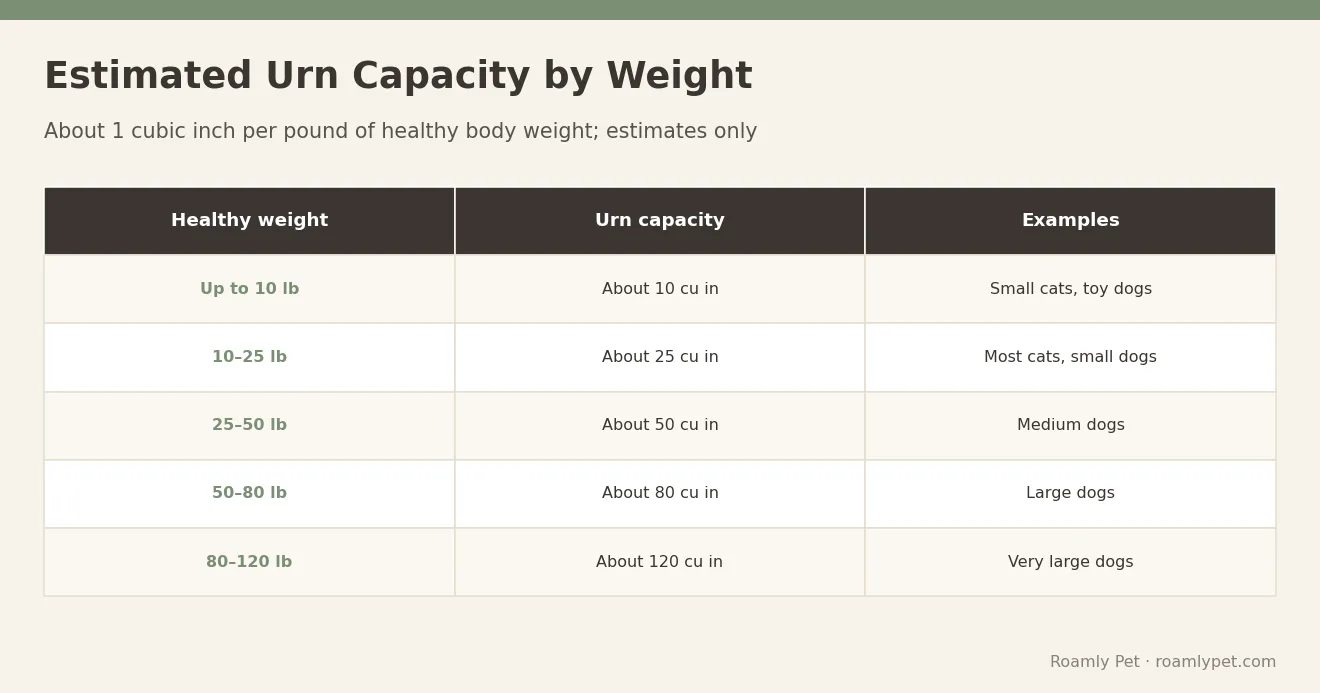
Estimated Urn Capacity by Weight
The table below applies the guideline to common weight ranges. It is an estimate only; individual pets vary, and so do urn designs.
| Pet’s healthy weight | Estimated urn capacity | Typical examples |
|---|---|---|
| Up to 10 lb (4.5 kg) | Around 10 cubic inches | Small cats, toy dog breeds |
| 10–25 lb (4.5–11 kg) | Around 25 cubic inches | Most cats, small dogs |
| 25–50 lb (11–23 kg) | Around 50 cubic inches | Medium dogs |
| 50–80 lb (23–36 kg) | Around 80 cubic inches | Large dogs |
| 80–120 lb (36–54 kg) | Around 120 cubic inches | Very large dogs |
| Over 120 lb (54 kg) | Ask about extra-large urns | Giant breeds |
For a fuller walk-through of sizing, including tips for urns with photo panels or drawers, see our pet urn size guide.
Why the Amount of Ash Varies
Cremated remains are mostly processed bone, so the amount depends more on your pet’s skeleton than on their overall weight. Several factors can make a difference:
- Bone density and frame: a sturdy, large-boned dog may leave more ash than a slender dog of similar weight.
- Breed and body shape: long-legged or deep-chested breeds can differ from compact ones.
- Age: bone density can change across a pet’s life.
- Body composition: fat and muscle do not add much to the final ash volume.
- Processing: how finely the remains are processed can slightly change the volume.
Because of these differences, two pets of the same weight can return slightly different amounts. This is normal and does not indicate a problem.
Use Healthy Weight, Not Final Weight
Many pets lose weight during illness or old age. Because bone structure stays largely the same, it is usually better to base urn size on your pet’s healthy adult weight rather than their weight at the end of life.
If you are unsure what that was, your vet’s records often list past weights. Breed averages can also give a rough idea. When in doubt, a slightly larger urn gives peace of mind, and any spare space is not visible once the urn is closed.
What Pet Ashes Look Like
Pet ashes are generally pale grey to off-white, with a slightly coarse, sandy texture rather than a fine powder. Small, firmer fragments are common. Any metal, such as surgical implants, is usually removed by the crematorium.
Ashes are typically returned in a sealed bag inside a temporary container. If that bag fits into your chosen urn, you can place it inside as it is. If not, our guide on how to transfer pet ashes into an urn explains the steps calmly and clearly.
Planning for Keepsakes or Companion Urns
The total amount of ash also matters if you plan to share it. A few common approaches:
- One main urn: size it to your pet’s full healthy weight.
- Main urn plus keepsakes: the main urn can be a little smaller, with small portions in keepsakes for family members.
- Keepsakes only: some families scatter most of the ashes and keep a small amount at home.
- Companion urn: for two pets together, add both healthy weights and check the urn’s total capacity.
Our guides on keepsake urns for sharing ashes and companion urns for two pets explain these options in more depth.
A Few Common Misunderstandings
Because cremation is not something most of us think about often, a few assumptions come up again and again. It may help to know that:
- Ash weight and urn capacity are different measures. Urns are sized by volume, so focus on cubic inches or milliliters rather than how heavy the bag feels.
- A heavier pet does not always mean much more ash. Extra weight from fat or fluid adds little to the final volume.
- Ashes are not always uniform. Slight differences in color or texture within one bag are normal.
- Ashes can settle. After being moved, the contents of the bag may settle and look smaller; this does not mean anything is missing.
If anything about the amount or appearance worries you, your crematorium is usually happy to explain.
When to Ask Your Crematorium
If you have already received your pet’s ashes, the simplest way to know the volume is to look at the bag or ask the crematorium, who may be able to give an estimate. If you are choosing an urn before cremation, the weight guideline is usually enough, and you can contact the urn maker with your pet’s weight for advice.
Either way, it is reasonable to take your time. Ashes can stay safely in the provider’s container until you are ready to decide.
Finding a Fitting Urn
Roamly Pet makes solid wood and hand-glazed ceramic urns for dogs and cats, as well as biodegradable salt urns for burial or water. Most styles can be personalized with free name-and-date engraving, optional photo laser-engraving or a cast paw print, and each urn is made or engraved to order and shipped within 3–5 business days. Explore our dog urns and cat urns, and if you would like help matching your pet’s weight to an urn size, just send us a note through our contact page.
Frequently Asked Questions
How much ash does a cat leave after cremation?
Most cats leave a fairly small amount of ash, often fitting comfortably in an urn of around 10 to 25 cubic inches, depending on their healthy weight and frame. Using the guideline of about 1 cubic inch per pound, an 11-pound cat would usually need an urn of at least 11 cubic inches.
How much ash does a large dog leave?
Large dogs leave considerably more ash than cats or small dogs. A 70-pound dog would usually need an urn of around 70 cubic inches or slightly more, based on the common guideline. Large-boned or giant breeds may need extra capacity, so choosing a bigger urn is often sensible.
Should I use my pet’s weight at the time of death?
It is usually better to use your pet’s healthy adult weight. Pets often lose weight through illness or old age, but their bone structure, which makes up most of the ash, stays largely the same. Your vet’s records may list earlier weights if you are unsure.
Why did I receive less ash than I expected?
Ash volume varies with bone density, breed, age and how finely the remains are processed, so amounts differ between pets of similar weight. The 1 cubic inch per pound guideline is designed for urn sizing and often includes spare room. If you have concerns, ask your crematorium to explain their process.
Is it a problem if the urn has spare space?
Not at all. Spare space is common and is not visible once the urn is closed, especially when the ashes stay in their sealed bag. Many families choose a slightly larger urn on purpose, because it avoids the worry of ashes not fitting and leaves room for a small keepsake, such as a collar tag.