
Quick answer
Biodegradable pet urns are made from natural materials such as salt, paper, sand or plant fibres that break down over time. Some are designed for burial in soil, others for placing in water, and a few work for both. Choose one suited to your plan, check local rules, and size it to your pet’s weight.
For many families, returning a pet gently to nature feels right. Biodegradable pet urns make that possible, whether you picture a quiet spot in the garden, a favourite walking trail or a calm stretch of water. They are designed to break down naturally, leaving no lasting container behind.
This guide explains the main materials, the difference between earth and water burial, how to plan a simple ceremony, and what to check locally beforehand. It is practical, unhurried information to help you choose what feels right.
What Are Biodegradable Pet Urns?
Biodegradable pet urns are containers for ashes made from materials that break down naturally in soil or water. Unlike wood or ceramic urns, which are meant to be kept for years, they are designed to be placed in the earth or water and gradually return to it.
People choose them for different reasons:
- A wish for a natural, low-impact farewell.
- A pet who loved the garden, the woods or the water.
- Plans to scatter or bury rather than keep ashes at home.
- A desire for a simple ceremony that marks the moment.
A biodegradable urn can also hold just part of the ashes, while the rest stays at home in a keepsake. There is no single right way, and many families combine options.
Common Materials: Salt, Paper, Sand and Plant Fibre
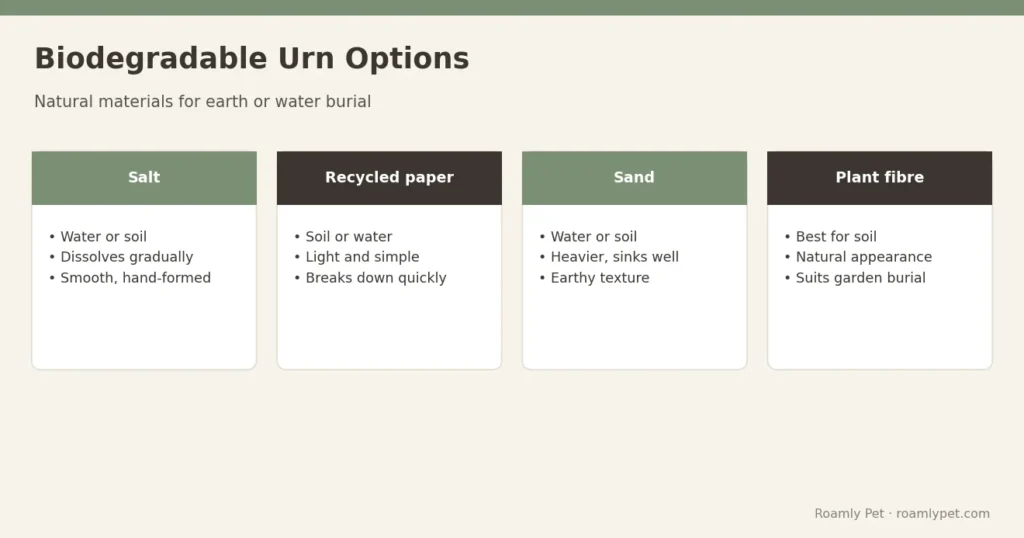
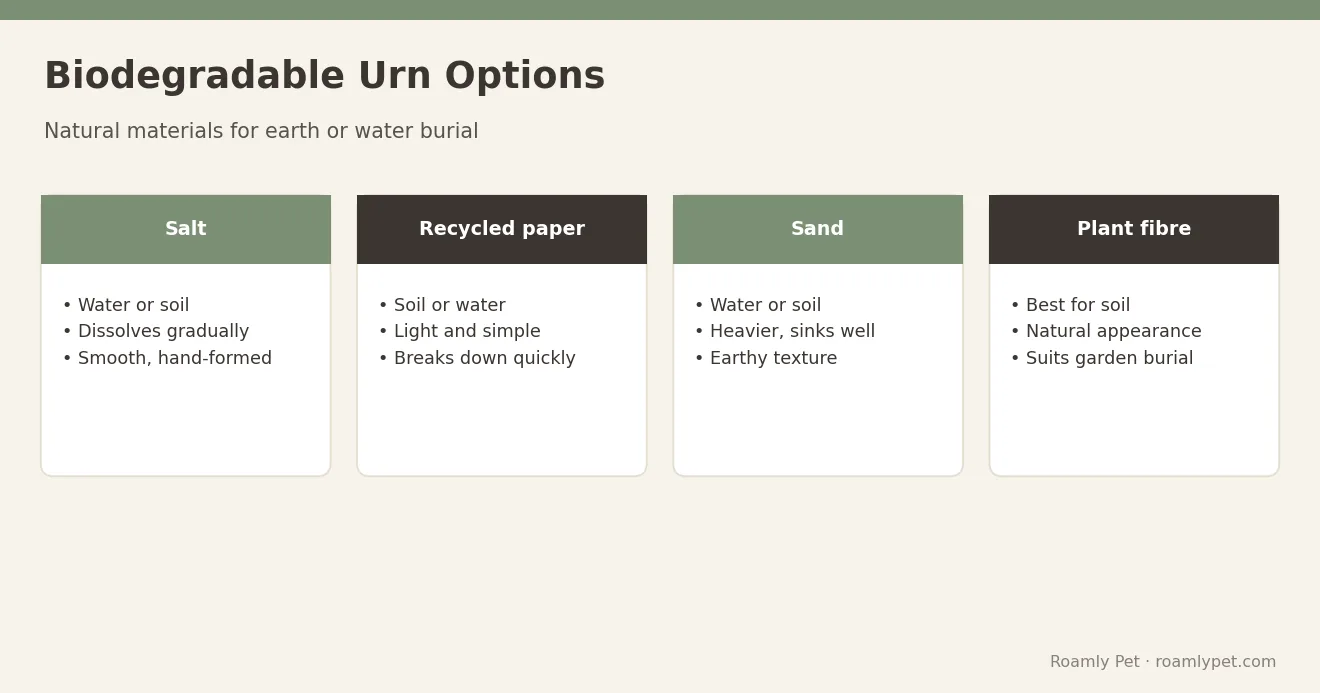
Biodegradable urns are made from several natural materials, each with its own character. The table below gives a general comparison; exact behaviour depends on the individual product.
| Material | Best suited to | General character |
|---|---|---|
| Salt | Water, also soil | Dissolves gradually; often hand-formed and smooth |
| Recycled paper | Soil or water | Light and simple; breaks down fairly quickly |
| Sand and natural binders | Water or soil | Heavier, so it sinks; earthy texture |
| Plant fibre or starch | Soil | Natural look; suited to garden burial |
Roamly Pet offers biodegradable salt urns, which suit both earth burial and water burial. Whatever the material, check the product description for how it is intended to be used.
Earth Burial vs Water Burial
The two main options feel quite different, and the right one often depends on where your pet was happiest.
Earth burial
The urn is placed in a hole in the ground, usually in a garden, a private plot or a pet cemetery. Over time it breaks down into the soil. Many families mark the spot with a plant, stone or small tree.
Water burial
A water-suitable urn is placed gently in a lake, river or the sea, where it floats briefly, then sinks and dissolves. It can be a calm and moving ceremony, especially for a pet who loved to swim.
Both are valid choices. Think about whether you would like a place to return to, which an earth burial gives you, or a single meaningful moment, which a water burial offers.
Rules and Permissions to Check First
Rules about burying or scattering ashes vary widely by country, region and even local council, so it is always worth checking before you plan a ceremony. In general, consider:
- Private land: burial on land you own is often permitted, but some areas have restrictions, and rented homes need the owner’s agreement.
- Public parks and trails: these usually require permission from the land manager.
- Rivers, lakes and the sea: environmental authorities may have guidance on where and how ashes can be placed in water.
- Pet cemeteries: these will have their own policies for biodegradable urns.
Your local authority or environmental agency is the best source of current guidance. For more on garden burial specifically, see our article on burying pet ashes in your garden.
How to Plan a Natural Burial for Your Pet
A natural burial can be as simple or as personal as you like. A gentle sequence many families follow:
- Choose a place that meant something to your pet, and confirm it is permitted.
- Transfer the ashes into the biodegradable urn, following any product instructions.
- For earth burial, dig a hole deep enough that animals will not disturb it. Your local guidance may suggest a depth.
- For water burial, choose a calm moment and place the urn gently rather than throwing it.
- Say a few words, read something meaningful or simply sit quietly.
- Mark the place, if you wish, with a plant, stone or photo.
If you are moving ashes from a temporary container, our guide on how to transfer pet ashes into an urn walks through it step by step.
Choosing the Right Size
Biodegradable urns follow the same sizing guideline as other urns: about 1 cubic inch of capacity per pound of your pet’s healthy body weight. Check the listed capacity and choose the next size up if you are close to the limit.
If you want to bury only part of the ashes, a smaller urn may be all you need, with the rest kept in a keepsake at home. Our pet urn size guide includes a full chart by weight, which applies just as well to biodegradable designs.
For water burial in particular, an urn that is full and well sealed tends to behave as intended. Following the product’s guidance on filling helps the ceremony go smoothly.
Ideas for a Meaningful Ceremony
A ceremony does not need to be formal. Small touches often mean the most:
- Bring a favourite toy, a photo or a handwritten note.
- Invite the people who loved your pet, including children if they would like to come.
- Plant flowers or a shrub over an earth burial so something grows in that place.
- Scatter petals on the water after a water burial.
- Share a story or two about your pet’s quirks and habits.
You may also want to read a poem, such as Rainbow Bridge, or a piece of your own writing. For more ideas on remembering your pet after the burial, see 20 meaningful ways to honor your pet’s memory.
How Roamly Pet Can Help
Roamly Pet offers biodegradable salt urns suited to both earth and water burial, alongside our solid wood and hand-glazed ceramic urns for families who would like to keep ashes at home. Many styles can be personalized, with options varying by product, and each urn is made or engraved to order and shipped within 3 to 5 business days.
You can browse our biodegradable urns to see the current designs. If you are unsure which size to choose, or have a question about using an urn in water or soil, please contact us. We are happy to talk it through with you.
Frequently Asked Questions
How long does a biodegradable pet urn take to break down?
It depends on the material and conditions. Urns designed for water usually dissolve fairly quickly once submerged, while those buried in soil break down more slowly, influenced by moisture, temperature and depth. The product description usually gives a general indication, but natural conditions always vary somewhat from place to place.
Can I bury a biodegradable urn in my garden?
In many places, burying ashes on your own land is allowed, but rules vary by country and local authority. If you rent, ask the owner first. It is also wise to consider whether you might move in future, since the urn will become part of the garden and cannot easily be recovered.
Is a salt urn suitable for water burial?
Salt urns are commonly used for water burial because they dissolve gradually once submerged, and many also suit burial in soil. Always check the specific product guidance. Before placing any urn in a river, lake or the sea, check local environmental rules, which differ from one area to another.
Can I keep some ashes and bury the rest?
Yes, and many families do exactly that. A small keepsake urn at home can hold a portion of the ashes, while the rest goes into a biodegradable urn for burial. Choose the biodegradable urn size based on the amount you will actually place inside it.
Do biodegradable urns harm the environment?
They are designed to break down naturally, which is why many people choose them. Cremated remains themselves are mostly mineral. That said, local authorities sometimes limit where ashes can be placed, particularly near water sources, so checking current guidance is the best way to make sure your choice is respectful.