
Quick answer
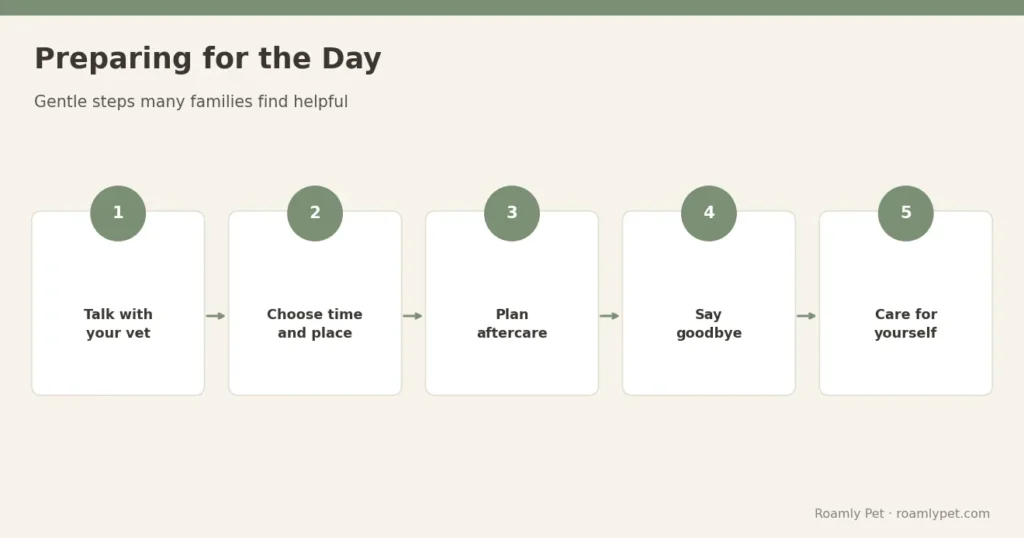
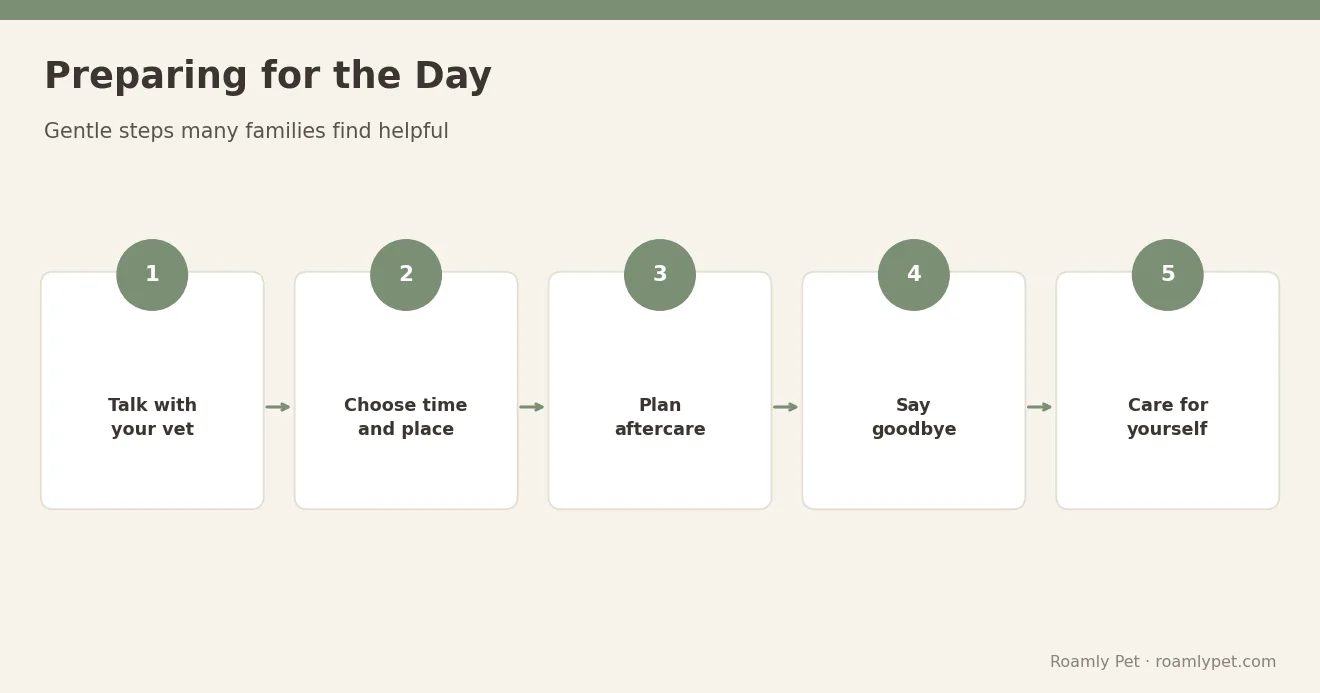
Preparing for pet euthanasia usually means talking openly with your vet, choosing a time and place, deciding who will be present, and planning aftercare such as cremation in advance. Your vet will explain each step on the day. Many families also plan small goodbye rituals, like a favorite meal or a paw print, so the final hours feel calm and loving.
Deciding to say goodbye to a dog or cat is one of the hardest moments of caring for an animal. Preparing for pet euthanasia ahead of time cannot take the sadness away, but it can make the day calmer, more peaceful, and closer to what you would want for your companion.
This guide offers gentle, practical information: questions to ask your vet, how to plan the day, what generally happens, aftercare options, and ideas for saying goodbye. Every pet and family is different, so your vet remains the best person to guide the medical side of this decision.
Talking With Your Vet First
Your vet is your most important partner when considering euthanasia. They know your pet’s health and can help you think through quality of life, comfort, and timing. It is completely normal to have many questions, and to ask them more than once.
Questions families often ask include:
- How can I tell whether my pet is comfortable or struggling?
- What will happen during the appointment, step by step?
- Can it take place at home, or only at the clinic?
- Can family members, children, or other pets be present?
- What aftercare options are available, and how are they arranged?
Writing questions down before the conversation can help, as emotions may make it hard to remember everything. There is no wrong question, and a good vet will answer patiently.
Preparing for Pet Euthanasia: Planning the Day
Many families find comfort in planning practical details ahead of time, so the day itself can focus on being present with their pet.
- Choose the setting. Some vets offer home visits; others have quiet rooms set aside at the clinic.
- Pick a time. A quieter time of day may feel less rushed.
- Decide who will be there. Each person can choose whether to stay throughout or say goodbye beforehand.
- Arrange payment and paperwork in advance where possible, so you do not have to deal with it afterwards.
- Bring comfort items such as a favorite blanket, bed, or toy.
- Plan transport home, perhaps with someone else driving.
None of these plans are fixed. If you need to change anything on the day, that is perfectly okay.
Some families also find it helpful to let close friends or relatives know in advance, so they can visit to say goodbye or simply offer support afterwards. A short message explaining the plan can spare you from repeating difficult news later, when you may want quiet more than conversation.
What Generally Happens During the Appointment
Your vet will explain the process for your pet specifically, and procedures can vary. In general terms, the appointment is designed to be calm and gentle.
Many vets begin by giving a sedative so the pet becomes relaxed and drowsy. Once your pet is settled, the vet administers the final medication, often through a vein, and then confirms that your pet has passed. Throughout, you can usually stroke and talk to your pet if you wish.
Some natural physical reactions may occur after passing, and your vet can tell you what to expect so these are not frightening. Take as much time as you need afterwards. Most vets understand that families want a few quiet moments to say a final goodbye.
Choosing Aftercare in Advance
Deciding on aftercare before the day means you will not have to make choices in a moment of grief. Your vet can explain which options are available locally.
| Option | What it means | Things to consider |
|---|---|---|
| Private cremation | Your pet is cremated individually and ashes are returned | Allows you to keep, scatter, or bury the ashes |
| Communal cremation | Several pets are cremated together; ashes are not returned | Suits families who do not wish to keep ashes |
| Home burial | Burial on your own property | Rules vary; check local regulations |
| Pet cemetery | Burial in a dedicated site | Availability varies by location |
Our guide to private vs communal pet cremation explains these options in more depth, including partitioned cremation. Costs and timescales vary by provider and location.
Ways to Say Goodbye
The days or hours before euthanasia can be a time to show your pet love in ways that feel meaningful. Small, simple gestures are often the ones people remember.
- Spend quiet time together in a favorite spot, such as the garden or a sunny window.
- Offer a favorite treat or meal, if your vet says it is suitable.
- Take photos or short videos, including close-ups of paws and face.
- Make a paw print or nose print. Our guide on how to make a paw print keepsake explains several simple methods.
- Keep a lock of fur in a small envelope or box.
- Write a letter to your pet to read aloud or keep.
Some families also ask the vet or crematorium to take a paw print, which many providers can do.
Supporting Children and Other Pets
Children often cope better when they are given honest, age-appropriate information rather than vague explanations. Phrases such as “put to sleep” can confuse younger children, so many parents gently explain that the vet will help the pet die peacefully and without pain. Our article on explaining pet loss to children offers more guidance.
Let children choose whether to be present, say goodbye beforehand, or help with a memorial. Each choice is valid.
Other pets in the home may notice the change in routine. Some vets suggest letting them see or sniff their companion afterwards, though opinions vary. Keep their routine steady, and ask your vet if you have concerns about how they are coping.
Caring for Yourself Afterwards
The hours and days after euthanasia can bring a mix of grief, relief, guilt, and exhaustion. All of these feelings are normal. You made a loving decision to spare your companion from suffering, even when it was painful to make.
Be gentle with yourself. Rest, eat simple meals, and lean on people who understand. You may find it helpful to talk with your vet if questions come up about the decision. If grief feels overwhelming, consider reaching out to a pet-loss support line or a counselor. Our guide on coping with pet loss offers further ideas for the weeks ahead.
How Roamly Pet Can Help
If you have chosen private cremation, an urn can give your companion’s ashes a peaceful place at home. Roamly Pet makes personalized cremation urns for dogs and cats in solid wood and hand-glazed ceramic, as well as biodegradable salt urns for burial or water. Each urn is made or engraved to order and shipped within 3 to 5 business days.
You can browse all pet urns whenever you feel ready; there is no need to decide straight away. If you have questions about sizing or engraving, please contact us, and we will help gently and without pressure.
Frequently Asked Questions
How do I know when it is time for euthanasia?
There is rarely a single clear moment. Your vet can help you assess your pet’s comfort, appetite, mobility, and enjoyment of daily life. Many families keep a simple daily note of good and bad days. Ultimately, the decision is made together with your vet, with your pet’s comfort at the center.
Can I be with my pet during euthanasia?
In most cases, yes. Many vets encourage owners to stay so their pet feels safe and comforted, but it is entirely your choice. Some people prefer to say goodbye beforehand. Neither choice is wrong. Ask your vet in advance so they can explain what you will see and help you prepare.
Can euthanasia be done at home?
Many vets offer home visits, and some services specialize in at-home euthanasia. A home setting can feel calmer for some pets and families. Availability varies by location, so ask your vet about local options well ahead of time if this is important to you.
Should I arrange cremation before the appointment?
It often helps. Deciding on aftercare in advance means you will not need to make choices in a moment of grief. Your vet can usually arrange private or communal cremation through a local provider. Costs and timescales vary by provider and location, so ask for details beforehand.
Is it normal to feel guilty after euthanasia?
Yes, guilt is very common, even when the decision was made with love and careful thought. Remember that euthanasia is often chosen to prevent suffering. Talking with your vet, friends, or a pet-loss support line can help. If feelings remain heavy, a counselor can offer additional support.