
Quick answer
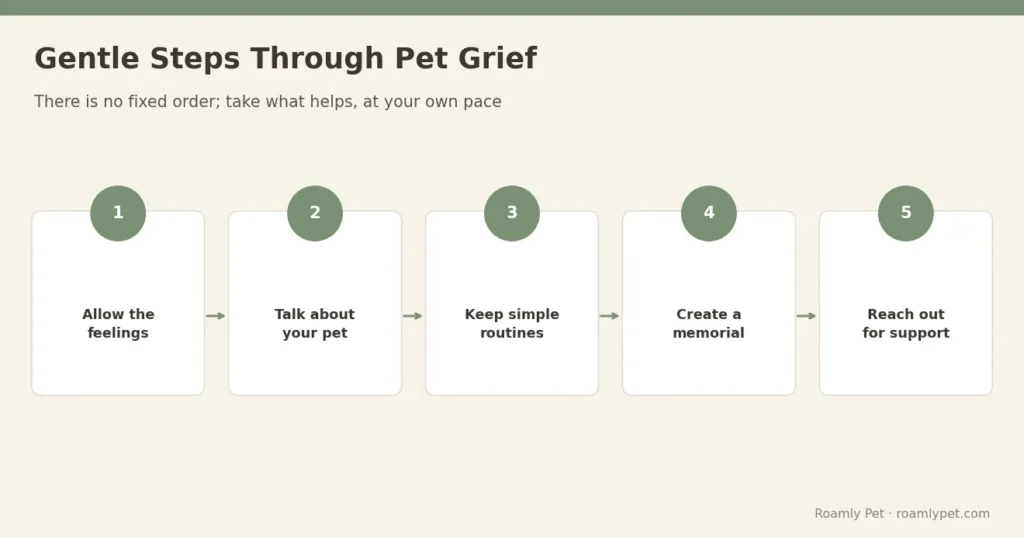
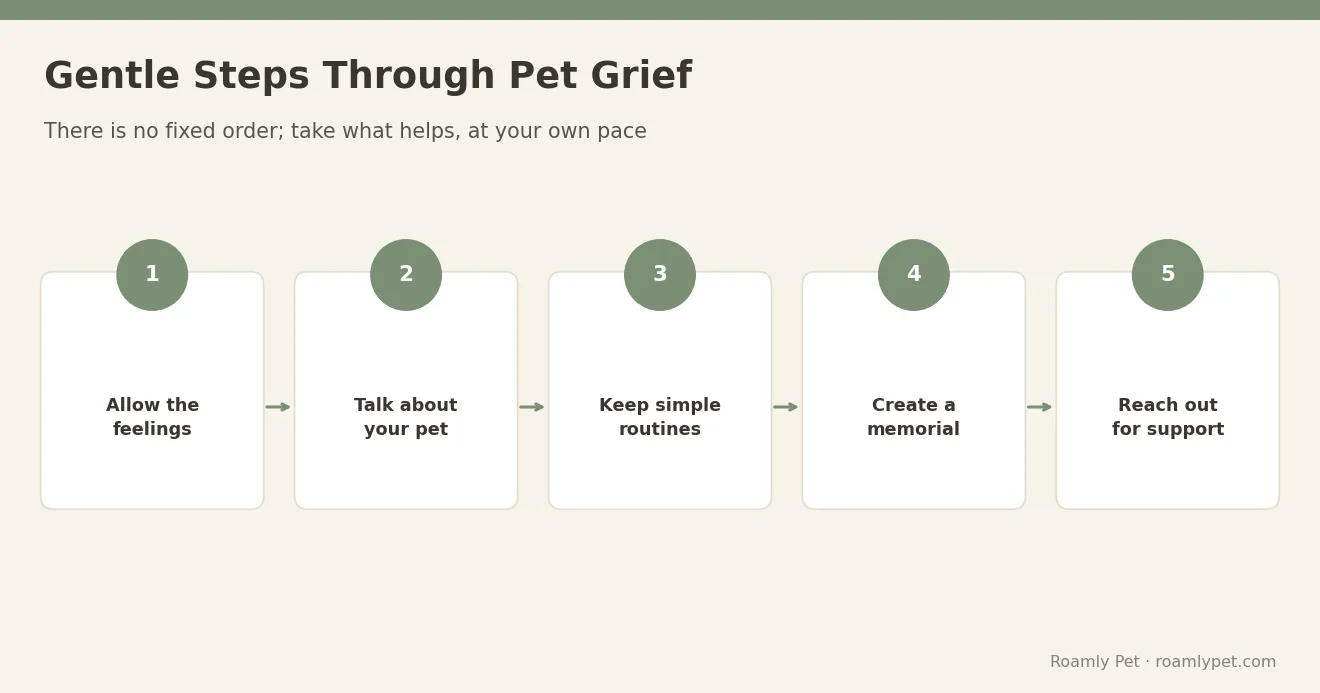
Coping with pet loss starts with accepting that the grief is real and that there is no correct timeline. Common reactions include sadness, guilt, and disrupted routines. Gentle steps help: talk about your pet, keep simple routines, create a memorial, and lean on friends. If grief feels overwhelming, a pet-loss support line or a counselor can offer support.
Losing a dog or cat can hurt as deeply as losing any close companion. Coping with pet loss is not about moving on quickly; it is about finding ways to carry the love and the sadness together until the weight feels a little lighter.
This guide describes common grief reactions, explains why pet grief can feel so intense, and offers small, practical steps that many people find helpful. It also covers where to find support if grief begins to feel overwhelming. Read at your own pace, and take only what feels useful today.
Why Pet Grief Feels So Deep
A pet is woven into the shape of each day: the morning greeting, the walk, the weight on the bed at night. When that presence is gone, the absence shows up everywhere, often at unexpected moments.
Pets also offer a kind of uncomplicated companionship. They do not judge, and the bond is often built on shared routine and quiet trust. Losing that can feel like losing a part of home itself.
Sometimes people around you may not fully understand the depth of the loss. That can make grief feel lonelier. Please know that your feelings are valid. Grieving a pet is a natural response to losing someone you loved and cared for, and it deserves the same gentleness you would offer anyone else.
The circumstances of a loss can also shape how grief feels. A sudden accident, a long illness, or a planned goodbye each bring their own mix of shock, exhaustion, or relief. None of these responses is wrong, and none needs to be explained or justified to anyone.
Common Grief Reactions
Grief looks different for everyone, and it rarely follows a neat order. Many people experience some of the following:
- Sadness and tearfulness, sometimes in waves that arrive without warning.
- Guilt or second-guessing, especially after an illness or a difficult decision.
- Numbness or disbelief in the first days.
- Disrupted routines, such as reaching for the lead or listening for a familiar sound.
- Tiredness or difficulty concentrating while you adjust.
- Relief, if your pet had been unwell, which can then bring its own guilt.
All of these are normal. Noticing them without judgment can make them a little easier to sit with. Feelings tend to soften over time, even if they return on anniversaries or in familiar places.
Gentle Ways of Coping With Pet Loss
There is no single method that works for everyone, but small steps can help you through each day.
- Talk about your pet. Share stories with people who knew them, or write down favorite memories.
- Keep simple routines. Regular meals, sleep, and fresh air give structure when days feel shapeless.
- Allow yourself to feel. Tears, laughter, and quiet are all part of grieving.
- Decide on belongings slowly. There is no rush to put away a bed or bowls.
- Create a small ritual. Lighting a candle or visiting a favorite walking spot can offer comfort.
- Be patient with yourself. Healing is rarely linear.
If you are looking for ideas to mark your pet’s life, our list of meaningful ways to honor your pet’s memory offers many gentle options.
Living With Guilt and Difficult Decisions
Guilt is one of the most common and painful parts of pet loss. People often replay decisions about treatment, timing, or whether they noticed signs sooner. If euthanasia was part of the journey, those questions can feel especially heavy.
It can help to remember that decisions were made with love, with the information you had at the time. Many people find it useful to talk through their questions with their vet, who can explain what happened and why certain choices were reasonable.
If you are facing this decision now, our guide on preparing for pet euthanasia explains what to expect and how to say goodbye in a way that feels right for you and your pet.
Grief Across the Household
Everyone in a home may grieve differently, and that includes children and other pets.
| Who | What you might notice | Ways to help |
|---|---|---|
| Adults | Different timelines and styles of grief | Talk openly, respect differences |
| Children | Questions, worry, play about the pet | Honest, simple words and reassurance |
| Older relatives | Loneliness if the pet was a daily companion | Regular visits and calls |
| Other pets | Changes in routine or searching behavior | Keep routines steady; ask your vet if worried |
If young children are involved, our guide on explaining pet loss to children offers age-appropriate language and ideas.
Memorials as Part of Healing
Many people find that creating a memorial gives their grief somewhere to go. It can be as simple as a framed photo by the door or as involved as a planted corner of the garden.
Memorial ideas that people often find comforting include:
- A memory box with a collar, tag, and favorite toy.
- An urn for ashes, kept somewhere peaceful at home.
- A photo album or written collection of stories.
- A plant, tree, or stone in a favorite outdoor spot.
There is no deadline for choosing a memorial. Some families decide straight away; others wait weeks or months until it feels right. Either is completely fine.
If ashes are returned to you before you have decided, they can rest safely in their container until you are ready. Choosing a memorial slowly, perhaps with family, can itself become a gentle part of remembering, a chance to talk about what made your pet special and how you would like them remembered.
When to Reach Out for Support
Grief often eases gradually, but sometimes it can feel too heavy to carry alone. Reaching out is a sign of care for yourself, not a weakness.
Consider speaking with someone if:
- Sadness is making daily life very difficult for a long period.
- You feel isolated or that no one understands.
- Guilt or distressing thoughts keep returning.
Helpful places to start include trusted friends and family, your vet, who may know of local resources, a pet-loss support line, or a grief counselor. Many communities and organizations offer pet-loss support groups, in person or online. If you ever feel unsafe or in crisis, please contact local emergency services or a crisis line right away.
How Roamly Pet Can Help
When you feel ready, a memorial can become a quiet place to remember. Roamly Pet makes personalized cremation urns for dogs and cats in solid wood and hand-glazed ceramic, as well as biodegradable salt urns for burial or water. Most styles include free name-and-date engraving, with some offering photo laser-engraving or a cast paw print.
You are welcome to browse all pet urns whenever the time feels right, with no pressure. If you have questions about sizing or engraving wording, please contact us, and we will help gently and patiently.
Frequently Asked Questions
How long does grief for a pet last?
There is no set timeline. Some people feel the sharpest sadness for a few weeks, while for others it lasts months, and feelings may return on anniversaries or in familiar places. Grief tends to soften gradually rather than disappear. Be patient with yourself, and reach out for support if it feels overwhelming.
Is it normal to grieve a pet as much as a person?
Yes. Many people grieve a pet as deeply as a human loved one, because pets are part of daily life, routine, and family. The strength of your grief reflects the strength of the bond. Your feelings are valid, even if others around you do not fully understand them.
How can I stop feeling guilty after my pet died?
Guilt is very common, especially after illness or euthanasia. It may help to remember that you made decisions with love and the information available. Talking with your vet about what happened can ease lingering questions. If guilt persists and feels heavy, a pet-loss support line or counselor can help you work through it.
Where can I find support for pet loss?
Start with trusted friends and family who knew your pet. Your vet may know of local resources. Pet-loss support lines, grief counselors, and support groups, both in person and online, can also help. If you ever feel unsafe or in crisis, contact local emergency services or a crisis line immediately.
When is it okay to get another pet?
There is no right time that applies to everyone. Some people feel ready within weeks, while others need much longer or decide not to. A new pet does not replace the one you lost. It can help to wait until you feel you can welcome a new animal for who they are.