
Quick answer
When explaining pet loss to children, use honest, simple words such as “died” rather than “put to sleep,” and match the detail to their age. Reassure them it was not their fault, let them ask questions, and invite them to help with a goodbye or memorial. Grief in children may come and go, so check in gently over time.
For many children, the death of a pet is their first experience of loss. Explaining pet loss to children can feel daunting, especially when you are grieving too. Yet with honest, gentle words, it can also help a child learn that sadness is natural and that love continues after someone is gone.
This guide offers age-appropriate language, answers to common questions, and practical ways to involve children in saying goodbye and remembering. Every child is different, so trust what you know about yours and adapt these ideas to fit your family.
Why Honesty Matters
It is natural to want to protect children from sadness. However, vague explanations can cause confusion or worry. A child told that a pet “went away” may wait for it to return, or wonder why it chose to leave. Phrases like “put to sleep” can make bedtime frightening for young children.
Simple, truthful words help children understand what has happened. You might say: “Biscuit died. That means her body stopped working, and she cannot come back. We are sad because we loved her very much.”
Honesty does not mean sharing every detail. It means giving accurate information at a level your child can understand, and leaving room for questions.
Explaining Pet Loss to Children by Age
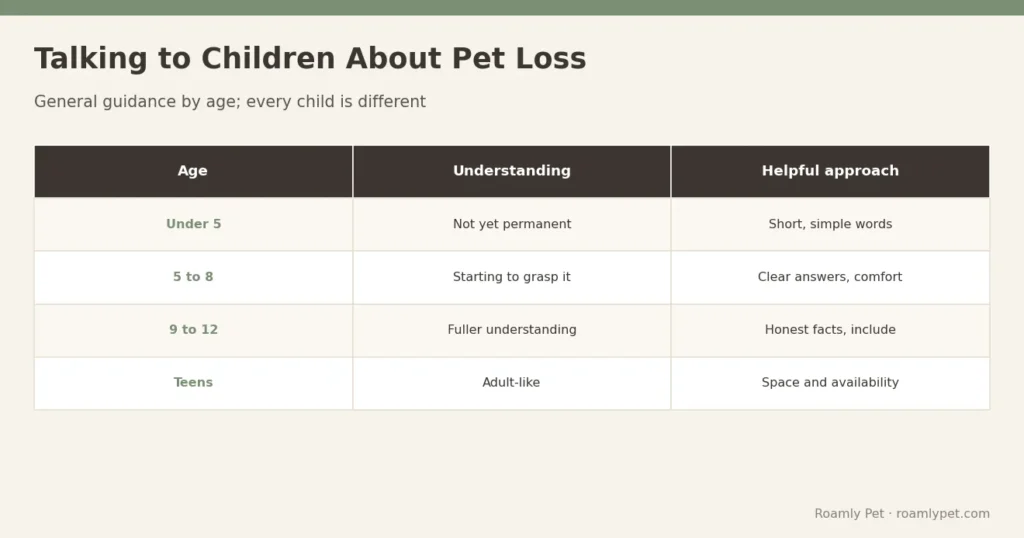
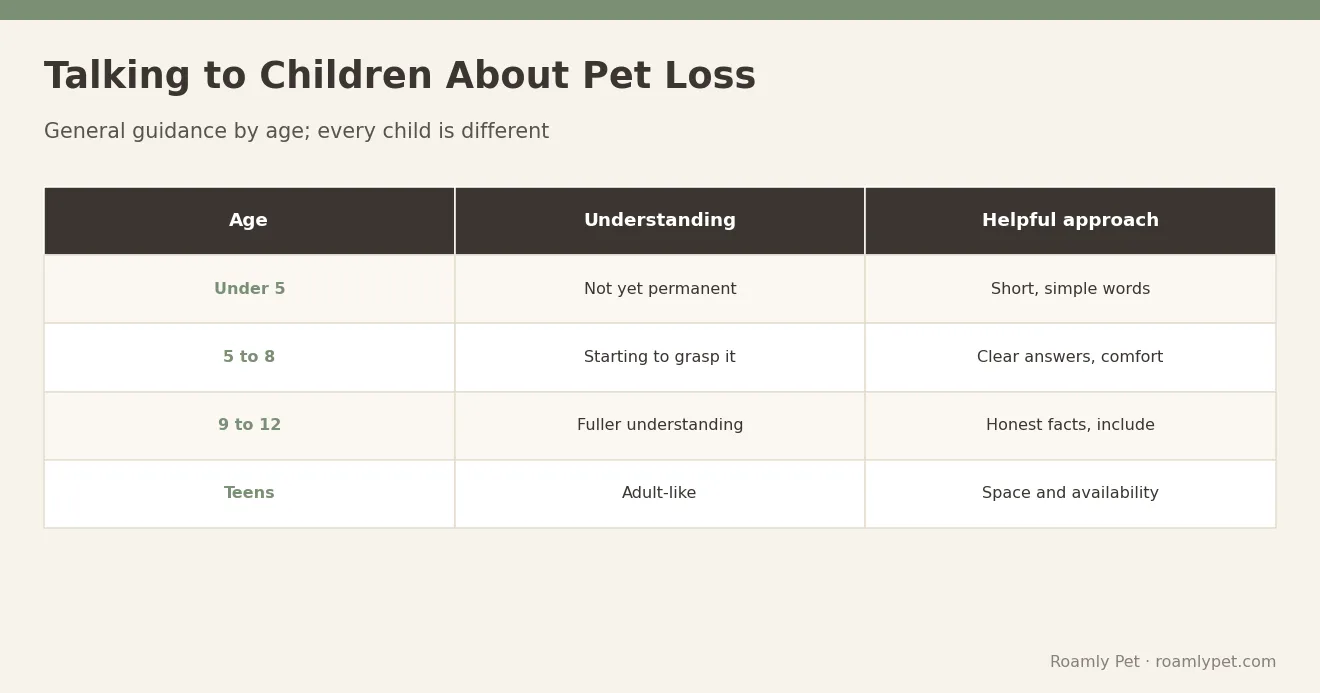
Children understand death differently as they grow. The table below offers general guidance, though every child develops at their own pace.
| Age | What they may understand | Helpful approach |
|---|---|---|
| Under 5 | May not see death as permanent | Short, concrete words; repeat gently |
| 5 to 8 | Begin to grasp permanence; may worry about others dying | Clear answers and reassurance |
| 9 to 12 | Understand death more fully; may want details | Honest facts; involve them in plans |
| Teens | Adult-like understanding; may grieve privately | Respect their space; stay available |
Whatever their age, children often grieve in short bursts. They may cry, then go back to playing. This is a normal way of processing big feelings.
Finding the Right Words
Choose a quiet moment and sit with your child. Keep the explanation short and gentle, and let them lead with questions.
- Use the pet’s name and the word “died” or “dead.”
- Explain simply what happened, such as old age or an illness the vet could not fix.
- Reassure them that nothing they did or said caused the death.
- Tell them it is okay to feel sad, angry, or confused, and okay to feel fine too.
- Share your own feelings in a calm way, so they see that adults grieve as well.
If you do not know the answer to a question, it is fine to say so. You might add: “I don’t know, but we can think about it together.”
When Euthanasia Is Involved
If a pet is being helped to die by a vet, children may have particular questions. Many parents explain that the pet was very unwell or in pain, that the vet could not make them better, and that the vet will help them die peacefully so they are no longer hurting.
Older children may want to be involved in the decision or present for the goodbye. Younger children may prefer to say goodbye beforehand. Offer choices, and respect whatever they decide.
Our guide on preparing for pet euthanasia includes more on planning the day, including how to support family members of all ages.
Answering Hard Questions
Children often ask direct questions that can catch adults off guard. Short, honest answers are usually best.
Common questions
- “Will they come back?” Gently explain that when a pet dies, they cannot come back.
- “Was it my fault?” Reassure them clearly that it was not.
- “Will you die too?” Acknowledge the worry and reassure them that you expect to be around for a very long time.
- “Where are they now?” Share your family’s beliefs, or explain what happened to the body, such as burial or cremation.
Expect the same questions more than once. Repetition is a normal part of how children make sense of loss.
Involving Children in Goodbyes and Memorials
Taking part in a goodbye or memorial helps children express feelings they may not have words for. Let them choose how much to be involved.
- Draw a picture or write a letter to the pet.
- Choose a photo for a frame or memory box.
- Help make a paw print keepsake, if one is available. See how to make a paw print keepsake.
- Plant a flower or decorate a stone for the garden.
- Share a favorite story at a small family gathering.
- Choose words or a photo for an urn, if the family is keeping ashes.
For more ideas, see 20 meaningful ways to honor your pet’s memory.
Supporting Children Over Time
Children’s grief can resurface weeks or months later, often at birthdays, holidays, or when they see a similar animal. Gentle check-ins help them know they can still talk about their pet.
It can help to let your child’s teacher or caregiver know about the loss, so they can offer understanding at school. Picture books about pet loss, available from libraries and bookshops, can also open conversations.
Most children gradually adjust with love and reassurance. If a child’s sadness or worry seems to be lasting a long time or affecting daily life, consider speaking with your family doctor, a school counselor, or a child counselor. Looking after your own grief matters too; our guide on coping with pet loss offers support for adults.
Helping Children Who Find It Hard to Talk
Some children do not want to talk about their feelings directly, and that is okay. Many find it easier to express grief through play, drawing, or quiet activities alongside a trusted adult.
- Talk while doing something together, such as walking, baking, or drawing.
- Read a story about loss and let your child respond in their own time.
- Offer a notebook or memory journal for private thoughts and pictures.
- Notice changes in sleep, appetite, or behavior, and respond with patience.
Let your child know the door is always open. A simple “I miss Biscuit today, do you?” can invite conversation without pressure. Even if they say little, knowing you are willing to listen can bring real comfort.
How Roamly Pet Can Help
A memorial that children help to create can become a comforting presence in the home. Roamly Pet makes personalized cremation urns for dogs and cats in solid wood and hand-glazed ceramic, as well as biodegradable salt urns for burial or water. Most styles include free name-and-date engraving, and some offer optional photo laser-engraving or a cast paw print.
Our personalized photo urns let you include a picture your child chooses. If you have questions about sizing or engraving, please contact us. Each urn is made or engraved to order and shipped within 3 to 5 business days.
Frequently Asked Questions
Should I tell my child the pet was put to sleep?
It is usually better to use clear words such as “died.” Young children may take “put to sleep” literally and become worried about bedtime or surgery. You can explain that the vet helped the pet die peacefully because they were very ill, using words suited to your child’s age.
Should my child be present for euthanasia?
It depends on the child’s age, temperament, and wishes. Older children sometimes want to be there, while younger children may prefer to say goodbye beforehand. Explain gently what will happen, offer a choice, and respect their decision. Your vet can also advise on what to expect.
How long will my child grieve for our pet?
Every child is different. Many children grieve in short bursts, moving between sadness and play, and feelings may return on anniversaries or holidays. Gentle check-ins help. If sadness seems to last a long time or affects daily life, consider speaking with your family doctor or a counselor.
Is it okay to cry in front of my child?
Yes. Showing your own sadness in a calm way teaches children that grief is a natural response to loss and that feelings can be shared. Explain why you are sad, reassure them that you are okay, and let them know they can talk to you whenever they want.
Should we get a new pet right away?
It is often best to wait until the family has had time to grieve. Getting a new pet immediately can give children the impression that a pet can be replaced. When everyone feels ready, involving children in the decision can make welcoming a new animal a positive step.