
Quick answer
Pet memorial garden ideas range from a single planter to a full garden corner. Popular elements include a favorite plant or tree, an engraved stone, a small bench, solar lights, and a biodegradable urn for burying ashes where permitted. Choose a spot your pet loved, use pet-safe plants if other animals share the garden, and check local rules before burying ashes.
A garden can be a gentle place to remember a dog or cat. It changes with the seasons, grows over time, and gives you somewhere to sit quietly with your memories. These pet memorial garden ideas work whether you have a large yard, a small patio, or only a windowsill.
Below you will find ideas for choosing a spot, selecting plants, adding stones and personal touches, and including ashes if you wish. There is no right way to do this. Start small, add pieces over time, and let the space grow alongside your remembering.
Why a Memorial Garden Helps
Tending a garden gives grief somewhere to go. Watering a plant, clearing leaves, or simply sitting nearby offers a quiet routine that many people find comforting in the weeks and months after a loss.
A memorial garden is also a living tribute. Plants bloom, rest, and return, which can mirror the way grief changes over time. For families, it creates a shared place where children and adults can visit, talk about their pet, or mark anniversaries together.
Most importantly, it can be as simple or as elaborate as you like. A single pot by the back door is every bit as meaningful as a landscaped corner.
Choosing the Right Spot
The best place is often somewhere your pet already loved. Think about where they liked to rest, watch the world, or play.
- A sunny patch where your cat used to bask.
- The corner of the lawn your dog patrolled each morning.
- A view from the kitchen window, so you see it every day.
- A quiet, sheltered area if you would like a reflective space.
Consider practical points too: how much sun the area receives, whether it drains well, and whether you may move house in future. If moving is likely, containers or a portable stone let you take the memorial with you.
Plants and Trees to Consider
Choose plants that suit your climate, soil, and the amount of care you can give. Many people pick plants with personal meaning, such as a flower in your pet’s favorite color or one that blooms near their birthday.
| Plant type | Why people choose it | Good for |
|---|---|---|
| Small tree or shrub | Grows over years as a lasting marker | Larger gardens |
| Perennial flowers | Return each year, marking the seasons | Borders and beds |
| Herbs | Fragrant, easy, and useful | Pots and small spaces |
| Ground cover | Softens stones and paths | Around a marker |
| Bulbs | A spring surprise each year | Any size of space |
If other pets share the garden, check that each plant is pet-safe using a reliable plant safety list, or ask your vet before planting. A local garden center can also advise on what grows well in your area.
Pet Memorial Garden Ideas With Personal Touches
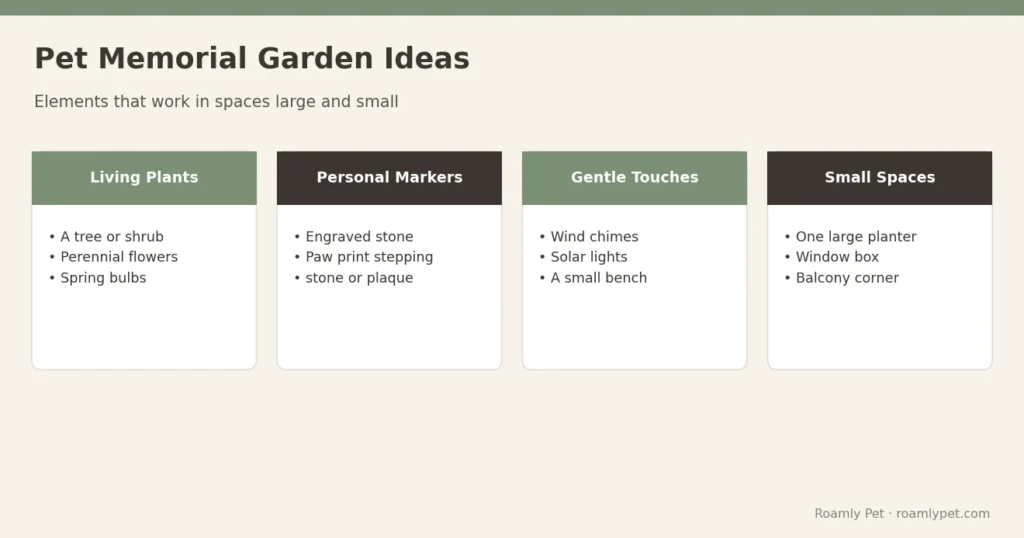
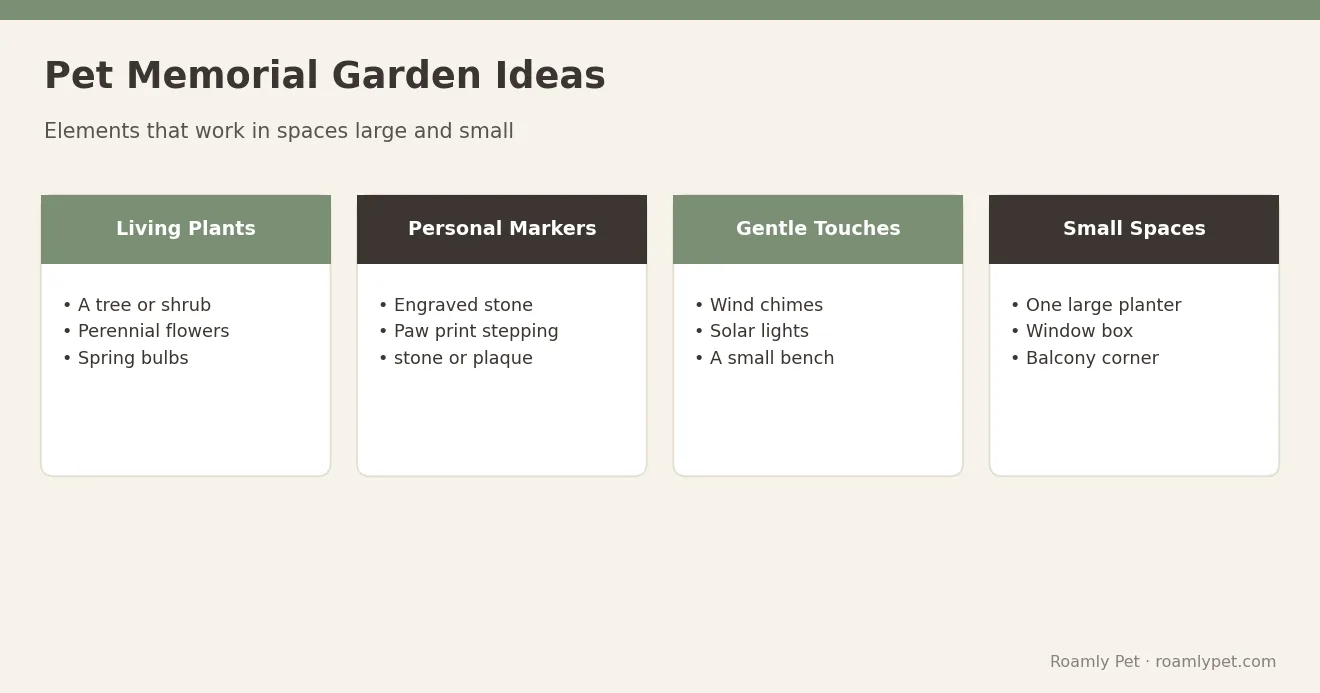
Personal details turn a pleasant corner into a meaningful memorial. Some ideas that families often choose include:
- An engraved stone or plaque with your pet’s name and dates.
- A favorite toy or collar set into a weatherproof box or under a cloche.
- Painted pebbles decorated by family members, especially children.
- A paw print stepping stone made from concrete or clay. Our guide on making a paw print keepsake covers simple methods.
- Wind chimes that make gentle sounds in a breeze.
- Solar lights that glow softly in the evening.
Add pieces gradually. Many people find that the garden becomes richer as new memories and ideas are added over time.
Including Ashes in a Memorial Garden
Some families choose to bury or scatter their pet’s ashes within the memorial garden. Others keep the ashes indoors in an urn and use the garden purely as a place of remembrance. Both approaches are meaningful.
If you plan to bury ashes, a biodegradable urn is designed to break down naturally in soil over time. Our biodegradable pet urns guide explains how they work, and burying pet ashes in your garden covers depth, placement, and practical considerations.
Rules vary by location, and some apply to rented homes or shared land. Check with your local authority and, if you rent, your landlord before burying ashes. If you might move in future, keeping a small portion of ashes indoors in a keepsake can offer peace of mind.
Ideas for Small Spaces
You do not need a large garden to create a memorial. Small spaces can be just as beautiful and personal.
- A single large planter with a small shrub and an engraved marker.
- A window box planted with your pet’s favorite colors.
- A balcony corner with a lantern, photo frame, and potted herbs.
- An indoor plant placed beside your pet’s urn or photo.
Containers have the added advantage of moving with you, so the memorial stays part of your home wherever you live. Choose a pot with good drainage and a size that suits the plant as it grows.
Making the Garden Part of Daily Life
A memorial garden is most comforting when it feels lived in, not just visited on special days. Placing a small bench or chair nearby invites you to sit with a morning coffee or a quiet moment in the evening.
Seasonal touches can mark the passage of time gently: spring bulbs, a summer flower, autumn leaves left to settle, or a lantern in winter. Many families also visit on anniversaries, perhaps adding a new plant or stone each year.
For more ways to keep your pet’s memory close, see 20 meaningful ways to honor your pet’s memory.
Creating the Garden Together
A memorial garden can be a shared project for the whole household. Working side by side gives family members a chance to talk about their pet, share stories, and grieve in their own way while doing something practical.
- Let each person choose one plant or object to include.
- Invite children to paint stones or make a small sign.
- Plan a quiet planting day, perhaps on a meaningful date.
- Take a photo of the finished space to send to relatives who live far away.
Friends who knew your pet may also like to contribute a plant or a stone. Over time, these gifts can make the garden feel like a record of how many people loved your companion.
How Roamly Pet Can Help
If you would like to include your pet’s ashes in a memorial garden, Roamly Pet offers biodegradable salt urns designed for burial or water ceremonies, alongside personalized solid wood and hand-glazed ceramic urns for keeping ashes at home. Most styles include free name-and-date engraving, and each urn is made or engraved to order and shipped within 3 to 5 business days.
You can browse our biodegradable urns to find a fitting option. If you have questions about sizing or engraving, please contact us, and we will be glad to help.
Frequently Asked Questions
What should I plant in a pet memorial garden?
Choose plants that suit your climate, soil, and available care, and that hold personal meaning, such as a flower in your pet’s favorite color. Small trees, perennials, herbs, and bulbs are popular. If other pets use the garden, check each plant against a reliable pet-safe list or ask your vet.
Can I bury my pet’s ashes in my memorial garden?
In many places you can, but rules vary by location and may differ for rented or shared property. Check with your local authority and, if you rent, your landlord. A biodegradable urn is designed to break down naturally in soil, making it a popular choice for garden burial.
How do I make a memorial garden in a small space?
Use containers. A single large planter, a window box, or a few pots on a balcony can hold a small shrub, flowers, and an engraved marker. Add a lantern or photo for a personal touch. Containers also move with you, so the memorial can stay part of your home.
What can I write on a memorial garden stone?
Keep it short so it stays legible outdoors. Common choices include your pet’s name and dates, a nickname, or a brief phrase such as “Always in our hearts.” Some families add a paw print design. Choose weather-resistant materials and engraving that will last through changing seasons.
What if I move house after creating a memorial garden?
Many families plan for this by using containers, a portable stone, or keeping a small portion of ashes indoors in a keepsake. If ashes are buried in the garden, you may not be able to move them easily, so consider your plans before choosing a final resting place.