
Quick answer
You can often travel or fly with pet ashes, but rules vary by airline, airport and country. Carrying them in hand luggage is usually preferred. Use a container that security X-ray machines can see through, keep the cremation certificate with you, and check current guidance from your airline, airport security (such as the TSA in the US) and the destination country.
Traveling or flying with pet ashes is something many families do: moving house, bringing a pet home to scatter somewhere special, or simply wanting them close on a long journey. It is usually possible, but a little preparation makes it much smoother.
This guide explains how airport screening generally works, which containers tend to travel well, what documents to carry, and the questions to ask your airline and the authorities in the countries you are traveling through. Rules change and differ from place to place, so treat this as a starting point and always confirm current guidance before you go.
Can You Travel or Fly With Pet Ashes?
In many cases, yes. Cremated remains are not generally treated as hazardous, and many airlines allow them in carry-on or checked baggage. However, each airline sets its own policy, airport security has its own screening rules, and countries can have their own import requirements.
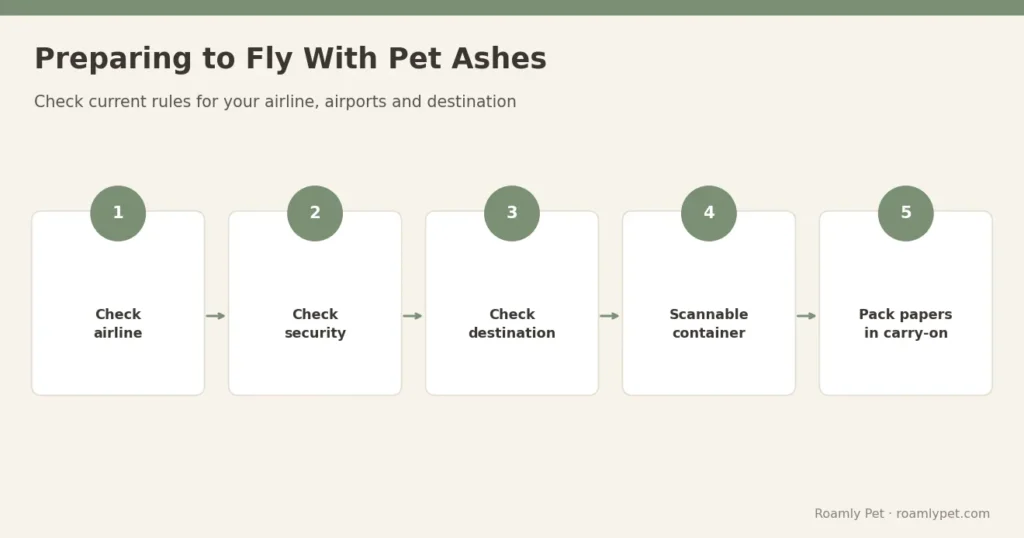
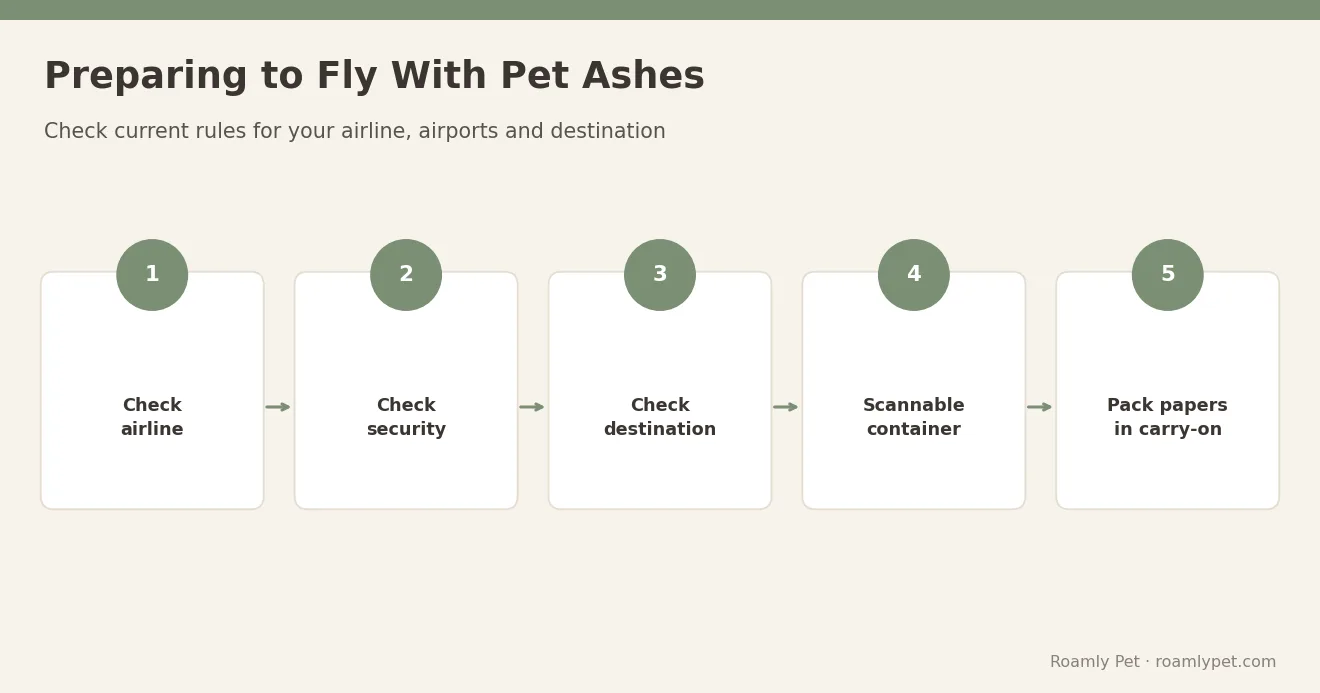
Before you travel, it is wise to check three sources:
- Your airline: whether ashes are allowed in hand luggage, checked baggage or both.
- Airport security: for example, TSA guidance in the United States, or the security authority for your departure airport.
- The destination country: any customs, import or documentation rules for human or animal remains.
If any guidance is unclear, call ahead and ask. It is far easier to adjust plans before you arrive at the airport.
How Airport Security Screening Usually Works
Security officers generally need to be able to see the contents of a container on the X-ray screen. If the container is too dense for the image to show what is inside, it may not be allowed through. In the United States, TSA guidance has stated that officers will not open a container of cremated remains, even if asked, so a container that cannot be screened may be refused at the checkpoint.
Policies elsewhere may differ, and procedures can change, so check the current guidance for each airport on your route. Arriving a little earlier than usual gives you time if extra screening is needed. It may also help to tell the officer calmly what you are carrying; most are used to it and treat it with care.
Choosing a Travel-Friendly Container
Some urns are better suited to travel than others. The table below gives a general guide, but scanning results can vary with thickness and design.
| Container type | Screening | Travel notes |
|---|---|---|
| Plastic temporary container | Usually screens well | Light and practical; often what the crematorium provides |
| Wooden urn | Often screens well | Wrap it to protect the finish |
| Ceramic urn | Varies with thickness | Can be fragile; pad it carefully |
| Metal or stone urn | May not screen clearly | Consider a temporary container for the flight |
| Biodegradable urn | Varies by material | Protect from moisture and crushing |
If your urn may be hard to screen or is fragile, many families travel with the ashes in a simple temporary container and move them into the urn at home. Our guide on how to transfer pet ashes into an urn explains how.
Documents to Carry
Paperwork is not always requested, but carrying it can save time and worry. Useful documents include:
- the cremation certificate or letter from the crematorium
- any identification label that came with the ashes
- your contact details and travel itinerary
- a translated copy of the certificate, if traveling to a country with a different language
- any permits required by the destination country
Keep these with the ashes in your hand luggage, and consider keeping digital copies on your phone too.
Traveling with a pet’s ashes can also be emotionally tiring. Airports are busy, and being asked about the container may stir up feelings you were not expecting. It can help to keep the ashes in a familiar bag, travel with a companion if possible, and allow plenty of time so you never feel rushed. If you would prefer a quieter moment during screening, it is reasonable to ask an officer politely whether a private area is available; options vary by airport, but staff are often understanding.
Carry-On or Checked Baggage?
Many families prefer to keep their pet’s ashes in hand luggage, so they stay within reach and are less likely to be lost or damaged. Some airlines allow ashes in checked baggage, while others do not, so always confirm.
Wherever the ashes travel, pack them securely. Wrap the container in a soft cloth or bubble wrap, place it upright in the center of your bag, and surround it with clothing. If the container has a lid, a little tape around the seam can help it stay closed.
Traveling Internationally
Crossing borders adds another layer of rules. Some countries have specific requirements for bringing in cremated remains, such as documentation, declarations at customs or limits on certain materials. Others may treat pet ashes differently from human remains.
To avoid surprises, contact the embassy, consulate or customs authority of your destination country before you travel, and check any countries where you will change planes. If you plan to scatter ashes abroad, ask about local rules for that too; permissions for scattering vary widely. Our guide on choosing between an urn or scattering ashes covers this gently.
Road Trips, Trains and Sending Ashes by Post
Traveling by car or train is usually simpler. Secure the urn so it cannot slide or tip, for example in a padded box on the floor or wedged between soft bags. Avoid leaving it in a hot car for long periods if it is delicate.
Sending ashes by post or courier is a different matter. Many carriers do not accept cremated remains, and those that do often have specific packaging and labeling requirements. In the United States, for example, the postal service offers a dedicated option for cremated remains. Check the carrier’s current rules carefully before sending anything. For families sharing ashes across distances, small keepsake urns can make travel easier.
Finding a Fitting Urn
If you are choosing an urn with travel in mind, our comparison of wooden vs ceramic pet urns may help you weigh durability and display. Roamly Pet offers solid wood and hand-glazed ceramic urns for dogs and cats, plus biodegradable salt urns for burial or water, with free name-and-date engraving on most styles and optional photo laser-engraving or a cast paw print. Each urn is made or engraved to order and shipped within 3–5 business days. Browse our full collection, and if you have questions about size or engraving, please reach out through our contact page.
Frequently Asked Questions
Can I take my pet’s ashes in my carry-on bag?
Often yes, but it depends on your airline and the security rules at each airport. Many travelers prefer carry-on so the ashes stay with them. The container usually needs to be X-ray screenable. Check your airline’s policy and current security guidance, such as from the TSA in the US, before you fly.
What happens if security cannot see inside the urn?
If the X-ray image does not show the contents clearly, the container may not be allowed through the checkpoint. In the United States, TSA guidance has stated that officers will not open cremated remains. Using a plastic or thin wooden temporary container for the flight helps avoid this problem.
Do I need a certificate to fly with pet ashes?
It is not always required, but carrying the cremation certificate or a letter from the crematorium is strongly recommended. It can help at security, at customs, or if questions come up while traveling abroad. Some countries may ask for additional documents, so check with the destination country’s authorities in advance.
Can I scatter my pet’s ashes in another country?
Possibly, but rules for scattering ashes vary by country, region and location, and some places require permission. Beaches, parks, rivers and private land may each have different requirements. Check with the local authority or landowner where you hope to scatter, and with customs about bringing ashes into the country.
Is it better to travel with a temporary container?
For many families it is. Temporary plastic containers are light, usually easy to screen, and less likely to break. You can carry the decorative urn separately and empty, well-padded, or have it delivered to your destination, then transfer the ashes once you arrive and feel ready.