
Quick answer
Companion urns for two pets are either one larger urn that holds both sets of ashes or two matching urns placed side by side. Size by adding both pets’ weights and allowing roughly 1 cubic inch per pound. If one pet is still living, many families keep the first pet’s ashes in a sealed bag inside a roomy urn until the time comes.
When two pets shared a home, a bed, or a lifetime of walks, it can feel natural to want them resting together. Companion urns for two pets make that possible, either as one shared vessel or as a matching pair that sits side by side.
This guide walks through the practical choices calmly: how to size an urn for two, what to do if one companion is still with you, how to personalize a shared memorial, and which materials suit a long-term home display. There is no single right answer, only the one that feels true to your animals and your family.
What Are Companion Urns for Two Pets?
A companion urn is any memorial designed to hold the ashes of two animals. The term covers two quite different approaches, and it helps to know which one you are picturing before you start comparing options.
- One shared urn: a single larger vessel with enough capacity for both sets of ashes, usually kept in separate sealed bags inside.
- A matching pair: two urns in the same material and finish, displayed together on a shelf or mantel.
- A double-chamber urn: one piece with two internal compartments, so each pet has its own space.
Each approach honors the bond between your pets. The best fit often depends on timing, the space you have at home, and whether you might later want to divide or move the ashes.
Sizing a Companion Urn for Two
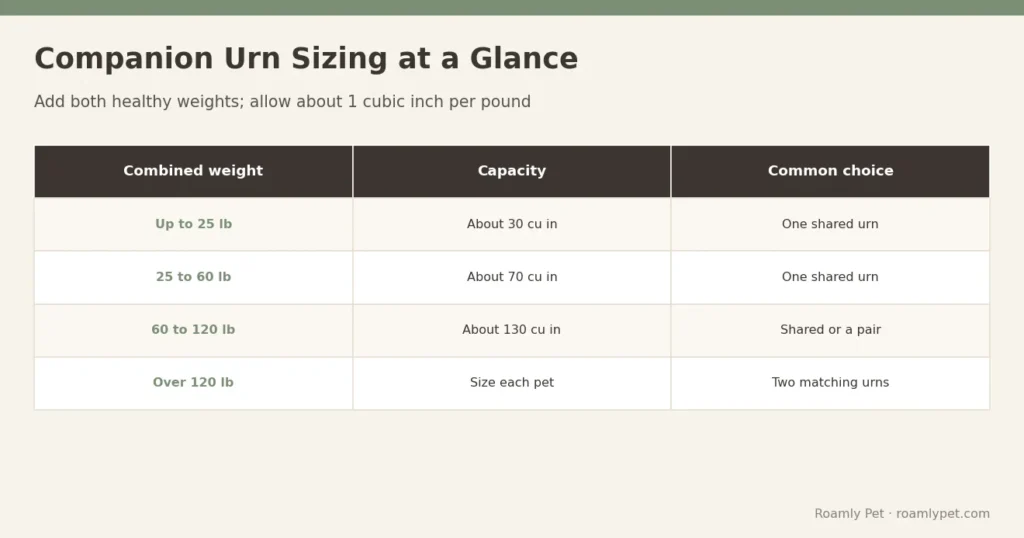
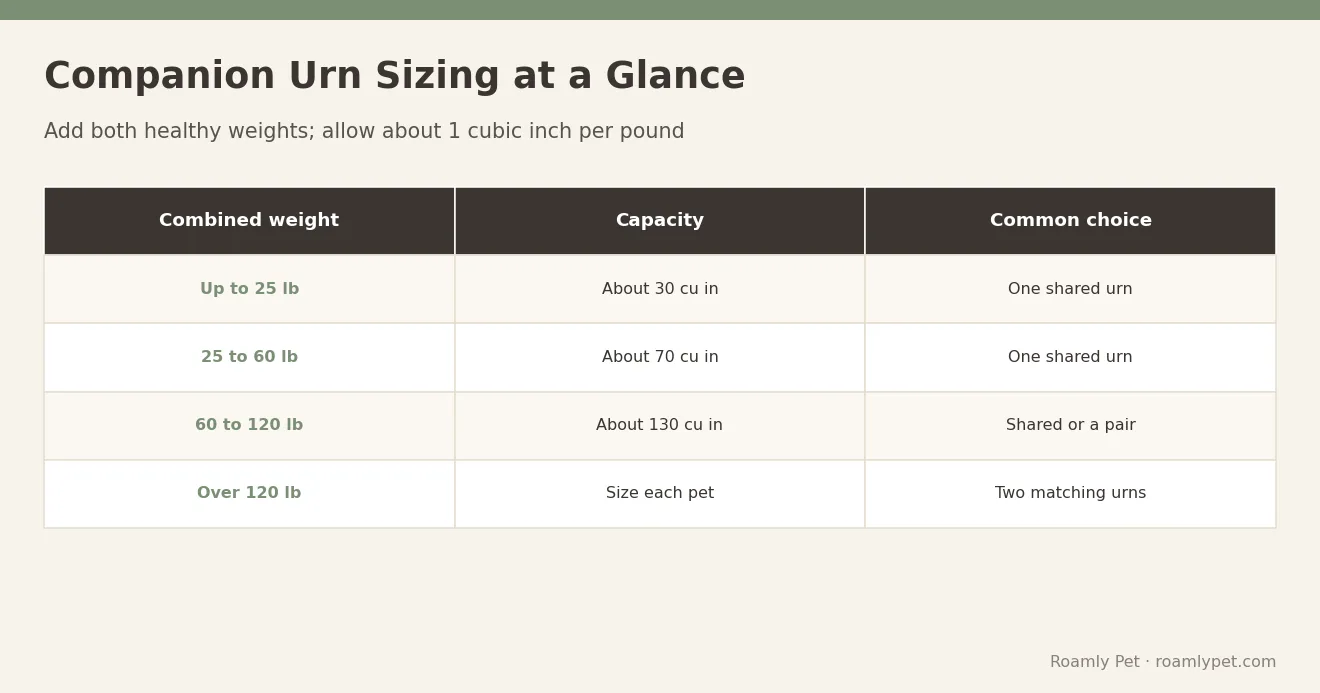
A widely used guideline is about 1 cubic inch of urn capacity per pound of your pet’s healthy body weight. For two pets, add their weights together, then round up to leave a little extra room for the bags and for any variation in ash volume.
| Combined weight | Suggested capacity | Typical pairing |
|---|---|---|
| Up to 25 lb | About 30 cubic inches | Two cats or two toy dogs |
| 25 to 60 lb | About 70 cubic inches | A cat and a medium dog |
| 60 to 120 lb | About 130 cubic inches | Two medium or large dogs |
| Over 120 lb | Two separate urns | Large or giant breeds |
These figures are a starting point, not a rule. Ash volume can vary with bone density and the cremation process. Our pet urn size guide and the article on how much ash your pet will have explain the calculation in more detail.
One Shared Urn or Two Matching Urns?
Both choices are meaningful, and families often decide based on practical details rather than sentiment alone. Consider the following points:
- Space: one urn takes up less room on a shelf, while a pair creates a small memorial display.
- Flexibility: separate urns are easier to move, share with relatives, or bury in different places later.
- Size: for two large dogs, a single urn can become heavy and bulky, so a pair is often more manageable.
- Personal meaning: some people find comfort in the idea of their pets literally together; others prefer each animal to keep a distinct identity.
If you are unsure, two matching urns keep every option open. You can always place them touching, or later combine the ashes into one larger vessel if that feels right.
When One Companion Is Still Living
Often the first pet passes years before the second. That timing raises a gentle question: should you buy a companion urn now, or wait?
Many families choose an urn with enough capacity for both pets right away. The first pet’s ashes stay in their sealed bag inside the urn, leaving room for the second bag later. Others prefer a single urn now and a matching one later, which avoids guessing a future weight.
Things to keep in mind
- Keep a note of the first urn’s material, finish, and size so a later match is easier.
- Leave the first bag sealed so the ashes remain identifiable.
- Choose an urn with an accessible opening if you plan to add a second bag.
There is no deadline. Some people wait until the second goodbye to decide anything at all, and that is perfectly reasonable.
Adding a Second Pet’s Ashes Later
When the time comes to place a second pet’s ashes into an existing urn, the process is usually simple. Open the urn on a clean, stable surface, check that the first bag is still securely closed, and place the second sealed bag beside it.
If the ashes arrive in a temporary container rather than a bag, transfer them into a sturdy, sealable bag first. Our guide on how to transfer pet ashes into an urn covers this step by step, including how to handle a funnel and keep the area tidy.
Some people like to label each bag with the pet’s name and dates. It is a small act, but it means the ashes stay distinct if the urn is ever opened again or the ashes are divided among family members.
Personalizing a Memorial for Two
Personalization is often where a companion memorial becomes truly yours. Most Roamly Pet styles can include free name-and-date engraving, and some offer optional photo laser-engraving or a cast paw print. Options vary by product.
For two pets, a few ideas work well:
- Both names joined with an ampersand, followed by each set of dates.
- A shared photo of the two together, if the urn supports photo engraving.
- A short phrase about their friendship, such as a nickname they shared at home.
- Matching urns with each name engraved separately, placed side by side.
Keep the wording short so it remains legible. If you would like to add the second pet’s details later, ask about engraving options before ordering, since adding text afterwards is not always possible.
Choosing a Material That Lasts
Companion urns usually stay on display for many years, so material matters. Solid wood brings warmth and a natural grain that suits living spaces and takes engraving well. Hand-glazed ceramic offers color, a smooth finish, and a slightly more decorative look.
If your plans include burial or a water ceremony, a biodegradable salt urn may be a better choice, since it is designed to break down naturally. For a deeper comparison, see wooden vs ceramic pet urns.
Whichever material you choose, think about where the urn will sit. Keep it away from direct heat, damp areas, and busy surfaces where it could be knocked over.
How Roamly Pet Can Help
Roamly Pet makes personalized cremation urns for dogs and cats in solid wood and hand-glazed ceramic, along with biodegradable salt urns. Each urn is made or engraved to order and shipped within 3 to 5 business days.
You can browse our dog urns to compare sizes and finishes for a shared memorial or a matching pair. If you are unsure whether one urn will hold both pets, or how to word a joint engraving, please contact us with their weights and your ideas. We are glad to help you find a calm, fitting place for them to rest together.
Frequently Asked Questions
Can two pets’ ashes be placed in one urn?
Yes. Many families place two pets’ ashes in a single urn with enough capacity for both. The ashes are usually kept in separate sealed bags inside the urn, so each pet remains identifiable. Add both healthy body weights together and allow roughly 1 cubic inch of capacity per pound, then round up for extra room.
Should I mix the ashes or keep them in separate bags?
That is a personal choice. Keeping separate bags means you can later divide, move, or scatter one pet’s ashes without affecting the other. Mixing them can feel symbolic for pets who were inseparable. If you are unsure, separate bags inside one urn keep the most options open while still keeping them together.
What if my second pet is still alive?
You can choose an urn now that is large enough for both and keep the first pet’s ashes in a sealed bag inside, or buy one urn now and a matching urn later. Note the material, size, and finish of the first urn so a match is easier to arrange when the time comes.
Can a cat and a dog share a companion urn?
Yes. Species does not matter for a companion urn; what matters is the combined volume of ashes. Add the two healthy weights together and size the urn from that total. Many families find comfort in keeping a cat and dog who grew up together in one shared memorial or a matching pair.
How should I word an engraving for two pets?
Short wording reads best. Common choices are both names joined together with their dates, a shared nickname, or a brief line about their friendship. If you plan to add the second pet’s dates later, ask before ordering whether the urn can be engraved again, since that is not always possible.