
Quick answer
The cremation itself usually takes a few hours, depending on your pet’s size and the equipment used. The whole process, from collection to having ashes returned, often takes from a few days to a couple of weeks. Timing varies by provider, location, cremation type and workload, so ask your vet or crematorium for their usual timeline.
Many families ask how long does pet cremation take, often because waiting for a beloved companion to come home in a different form feels hard. Knowing what happens, and roughly when, can make that waiting a little calmer.
This guide walks through the process step by step, from the moment your pet leaves your home or the vet clinic to the day the ashes are returned. Because every provider works differently, we focus on what usually happens and why timelines vary, rather than promising exact times. Your vet or crematorium is always the best source for their own schedule.
How Long Does Pet Cremation Take Overall?
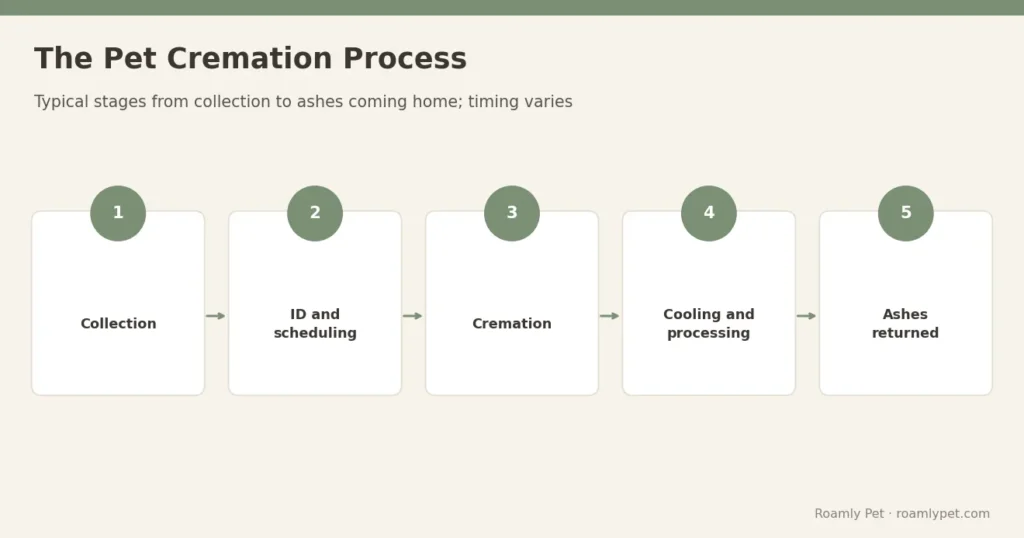
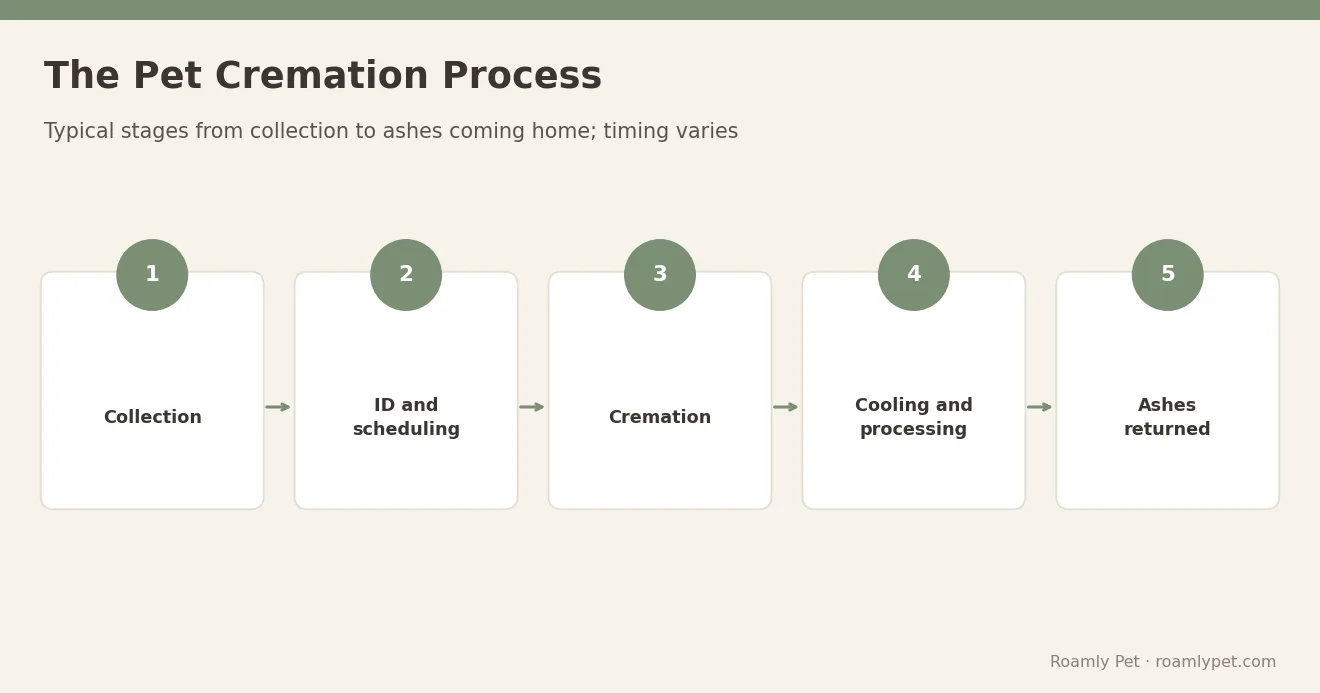
It helps to separate two timeframes. The cremation itself is usually measured in hours. The full process, including collection, paperwork, scheduling, cooling and returning the ashes, is usually measured in days. The table below shows the typical stages and what affects each one.
| Stage | What happens | What affects timing |
|---|---|---|
| Collection | Your pet is brought to the crematorium | Vet pick-up schedules, home collection, weekends |
| Waiting and preparation | Paperwork, ID tagging, scheduling | Workload, cremation type, holidays |
| Cremation | Your pet is cremated | Pet size, equipment, private or shared chamber |
| Cooling and processing | Remains cool and are processed into ashes | Provider procedures |
| Return | Ashes are collected or delivered | Collection point, delivery method, distance |
Some providers offer faster or same-day services, while others return ashes in a regular weekly round. Neither is unusual.
Step 1: Caring for Your Pet Before Collection
If your pet died at the vet clinic, they are usually kept in a cool, respectful space until the crematorium collects them. If your pet died at home, you may keep them in a cool room for a short time while you make arrangements, and many vets or crematoriums offer home collection.
Our guides on what to do when your dog dies at home and when a cat dies at home explain these first hours gently, including how to keep your pet comfortable while you contact your vet.
Step 2: Paperwork, Identification and Scheduling
At the crematorium, your pet is registered and usually given an identification tag or reference number that stays with them throughout. This is how providers keep track of each pet and match ashes to the right family.
Your pet is then scheduled for cremation. Private cremations may be booked individually, while partitioned and communal cremations are often grouped. If you are still deciding which option is right, our article on private vs communal pet cremation explains the differences.
Step 3: The Cremation Itself
During cremation, your pet is placed in a purpose-built chamber that uses high heat to reduce the body to bone fragments. The time this takes depends mostly on:
- Size and weight: a small cat or rabbit usually takes less time than a large dog.
- Equipment: chamber design and size vary between crematoriums.
- Cremation type: private cremations involve one pet at a time, while shared cremations involve several.
- Items included: some providers ask you to remove collars, blankets or toys first, so ask what is allowed.
Some crematoriums offer an attended cremation, where you can be present at the start. If that would bring you comfort, ask in advance, as it usually needs to be scheduled.
Step 4: Cooling and Processing the Ashes
After cremation, the remains need time to cool before they can be handled safely. The bone fragments are then carefully processed into the fine, pale grey or off-white ashes most people picture. Any metal, such as surgical implants or microchips, is removed at this stage.
The ashes are then placed in a temporary container, scatter tube or a basic urn, along with any paperwork or certificate the provider offers. The amount of ash depends mainly on your pet’s size; our guide on how much ash your pet will have explains what to expect.
Step 5: Returning the Ashes to You
Ashes are often returned through your vet clinic, collected directly from the crematorium, or delivered to your home. Many families find it helpful to know in advance which route will be used, so the call or knock at the door does not come as a surprise.
When you receive the ashes, you may feel a mix of relief and fresh sadness. Both are normal. There is no need to rush into any next step; ashes can stay safely in their container until you are ready.
When the container arrives, it usually carries a label or certificate with your pet’s name or reference number. It is worth keeping this paperwork with the ashes, especially if you later plan to travel with them, bury them or move them into a new urn. If anything looks unclear, such as a missing name or a reference you do not recognize, contact your vet or the crematorium straight away; they can check their records and explain. Most families simply place the container somewhere quiet, such as a shelf beside a photo, until they decide what feels right.
What You Can Do While You Wait
Waiting can feel long, but it can also be gentle time to think about how you want to remember your pet. Some families use these days to:
- gather favorite photos for a frame, album or photo-engraved urn
- decide whether to keep, bury or scatter the ashes
- talk with children or relatives about what has happened
- write down memories, habits and small stories while they feel close
- reach out to friends, your vet or a pet-loss support line if grief feels heavy
Grief after losing a pet is real and deserves care. If it feels overwhelming or does not ease over time, talking with a counselor can help.
Finding a Fitting Urn
When the ashes come home, you may want to move them into something more personal. Roamly Pet makes solid wood and hand-glazed ceramic urns for dogs and cats, along with biodegradable salt urns for burial or water. Most styles can carry a free name-and-date engraving, an optional photo laser-engraving or a cast paw print, and each urn is made or engraved to order and shipped within 3–5 business days.
You might start with our personalized photo urns, or explore dog and cat urns from the shop. If you are unsure about size or engraving wording, you are welcome to ask us through our contact page.
Frequently Asked Questions
How long does the actual cremation of a pet take?
The cremation itself usually takes a few hours, though it can be shorter for a small pet and longer for a large dog. Equipment and whether the cremation is private or shared also play a part. Cooling and processing the ashes adds more time, so ask your provider for their usual schedule.
When will I get my pet’s ashes back?
Many families receive ashes within a few days to a couple of weeks, but it depends on the provider, your location, weekends or holidays, and how the ashes are returned. Your vet or crematorium can give you their typical timeframe, and many will contact you when the ashes are ready.
Can pet cremation be done the same day?
Some crematoriums offer same-day or priority services, sometimes with an attended option, while others work to a regular schedule. Availability and any extra fees vary by provider and location. If quick timing matters to your family, mention it when you first make contact so they can explain what is possible.
Why is my vet taking longer than expected to return the ashes?
Delays can happen when a crematorium is busy, when collection runs are weekly, or around weekends and holidays. Ashes may also travel back through the clinic rather than coming straight to you. A gentle call to your vet is the simplest way to check where things are.
Is my pet cremated with their collar or blanket?
Policies vary. Some providers allow a small blanket or soft toy, while others ask that collars, tags and items containing metal or plastic be removed first. If you would like to keep the collar, take it off before collection. Ask your vet or crematorium what they permit.