
Quick answer
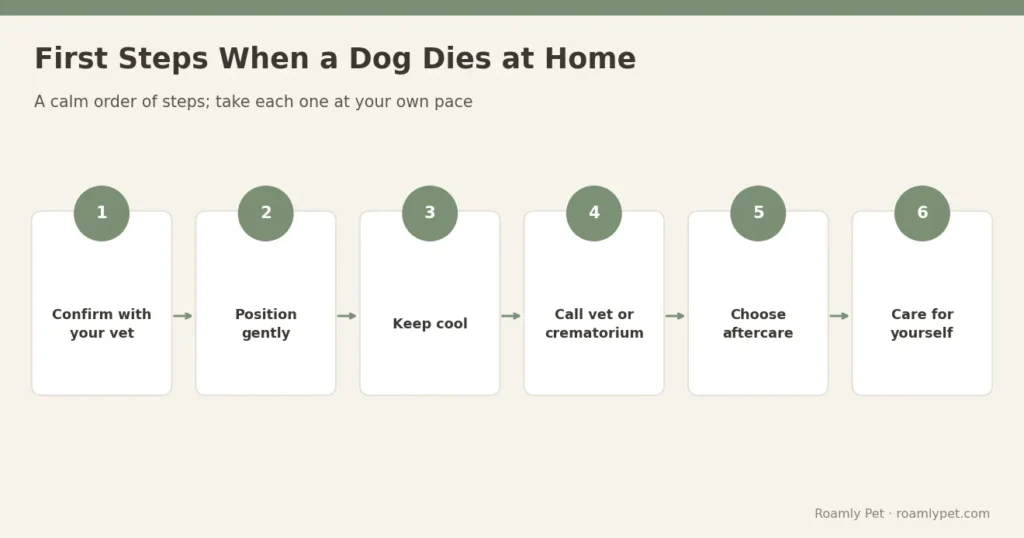
If your dog dies at home, first take a moment and, if unsure, call your vet to confirm. Lay your dog on a towel or blanket in a natural, gently curled position, and keep them in a cool room. Then contact your vet or a pet crematorium about collection, cremation or burial. There is no need to rush every decision.
Knowing what to do when your dog dies at home is something few of us prepare for, and when it happens the shock can make even simple steps feel overwhelming. Whether your dog passed peacefully in their bed or suddenly, you deserve calm, practical guidance.
This guide walks you through the first hours one step at a time: confirming your dog has passed, caring for their body, who to contact, and the aftercare choices available. Take each step at your own pace. If at any point you feel unsure, your vet is there to help, even if your dog has already died.
What to Do When Your Dog Dies at Home: First, Confirm
If you are not certain your dog has died, call your vet or an emergency vet clinic straight away. They can guide you over the phone or ask you to bring your dog in. Signs that a dog has passed can include:
- no breathing or chest movement
- no heartbeat or pulse you can feel
- eyes that stay open and do not respond
- no response to touch or their name
- the release of the bladder or bowels
These signs can be difficult to judge on your own, especially in a moment of shock. A vet can confirm for you, and many families find that call reassuring in itself. Once you know, give yourself a few quiet minutes. You do not have to do anything immediately.
Step 2: Gently Position and Prepare Your Dog
Within a few hours of death, a dog’s body begins to stiffen. If you can, gently place your dog on their side with their legs slightly curled, as if sleeping. This makes it easier to move them later and often feels more peaceful to see.
Some practical, gentle steps:
- Place a towel, old blanket or absorbent pad underneath, as fluids may be released.
- Close their eyes if possible; they may not stay fully closed, which is normal.
- Remove the collar if you would like to keep it.
- Consider a small clipping of fur or a paw print as a keepsake, if it feels right.
- Wear gloves if you prefer, and wash your hands afterwards.
If you would like to make a paw print, our guide to making a paw print keepsake explains simple methods.
Step 3: Keep Your Dog Cool and Comfortable
Your dog’s body should be kept cool while you make arrangements. A cool room away from direct sunlight and heating, such as a utility room or garage, is usually suitable for a short time. Wrapping them in a blanket can feel comforting.
How long you can safely wait depends on the temperature and your dog’s size. In warm weather, it is best to contact your vet or a crematorium as soon as you feel able. If arrangements will take longer, ask your vet for advice; many clinics can store your dog respectfully until collection.
Step 4: Contact Your Vet or a Pet Crematorium
Your vet is usually the best first call. They can confirm the death if needed, update your dog’s records, and explain the local aftercare options. Many vets work with a pet crematorium and can arrange collection from your home or ask you to bring your dog to the clinic. You can also contact a pet crematorium directly; many offer home collection, sometimes outside normal hours.
If your dog died after hours, an emergency clinic can offer guidance, and most crematoriums have a number you can call. Before you speak to anyone, it may help to know that there are usually three types of cremation to choose from. Our guide to private vs communal pet cremation explains each in plain language.
Step 5: Let Other Pets and Family Say Goodbye
Other dogs or cats in the home may benefit from seeing or sniffing their companion’s body. Some animals seem to understand, while others show little interest; both responses are normal. Give them time if you can.
Children and other family members may also want to say goodbye, perhaps by stroking their dog, sharing a memory or placing a small note or toy nearby. For guidance on gentle, honest language with young children, see our article on explaining pet loss to children.
Step 6: Choose Aftercare: Cremation or Burial
There is no single right choice. These are the most common options, and the table below compares them simply.
| Option | What it involves | Things to consider |
|---|---|---|
| Private cremation | Your dog is cremated alone and ashes are returned | Ashes can be kept, buried or scattered later |
| Partitioned cremation | Pets are separated in a shared chamber | Ashes returned; small mixing possible |
| Communal cremation | Pets are cremated together | Ashes are usually not returned |
| Home burial | Burying your dog on your own land | Local rules vary; check with your local authority |
| Pet cemetery | Burial in a dedicated cemetery | Availability and costs vary by area |
Rules about burying a pet at home differ between countries, states and councils, and may include requirements about depth, distance from water and land ownership. Always check with your local authority before burying your dog. Cremation timing and costs also vary by provider, so ask for a clear explanation of what is included.
Step 7: Small Practical Tasks in the Days After
Once the immediate steps are done, a few practical tasks can wait for a day or two:
- update or close your dog’s microchip registration
- let your pet insurer know, if you have a policy
- cancel regular deliveries of food or medication
- inform your groomer, dog walker or daycare
- decide what to do with beds, bowls and toys, in your own time
There is no deadline for putting things away. Some people find comfort in keeping a favorite toy or collar visible for a while.
Caring for Yourself After Your Dog Dies
Losing a dog, especially suddenly at home, can bring shock, guilt, sadness and exhaustion all at once. These feelings are a natural response to losing a companion who shared your daily life. Be patient with yourself, eat and rest when you can, and lean on people who understand.
Talking with friends, your vet or a pet-loss support line can help. If grief feels overwhelming or does not ease over time, a counselor can offer support. Our guide on coping with pet loss shares more gentle ideas.
How Roamly Pet Can Help
If you choose cremation, you may later want a lasting home for your dog’s ashes. Roamly Pet offers solid wood and hand-glazed ceramic dog urns, as well as biodegradable salt urns for burial or water. Most styles can be personalized with free name-and-date engraving, optional photo laser-engraving or a cast paw print, and each urn is made or engraved to order and shipped within 3–5 business days. There is no hurry; when you are ready, our team is happy to help with sizing or engraving questions through our contact page.
Frequently Asked Questions
How long can I keep my dog’s body at home after death?
It depends on the room temperature and your dog’s size. In a cool space, a few hours is usually manageable while you make arrangements, but warm weather shortens that time. Contact your vet or a pet crematorium as soon as you feel able, and ask them for advice if you need longer.
Who do I call when my dog dies at night?
Try your regular vet first, as many have an out-of-hours line or recorded message pointing you to an emergency clinic. Many pet crematoriums also offer after-hours numbers and collection. If no one is available, keep your dog cool and wrapped, and call first thing in the morning.
Can I bury my dog in my backyard?
In some places you can, but the rules vary widely between countries, states and local councils. Some areas have requirements about depth, distance from water sources, or whether you own the land. Check with your local authority before burying your dog, and consider whether you might move house in future.
Should my other pets see my dog’s body?
Many owners find it helpful to let other pets see or sniff their companion’s body, as it may help them understand the change. Some animals show interest and others do not, and both reactions are normal. Supervise gently, and give your remaining pets extra attention and routine in the days after.
Is it normal to feel guilty after my dog dies at home?
Yes, guilt is a very common part of grief, especially after a sudden loss or a death you did not witness. Many owners wonder whether they missed signs or should have acted differently. Talking with your vet can answer medical questions, and friends, a pet-loss support line or a counselor can help you process these feelings.