
Quick answer
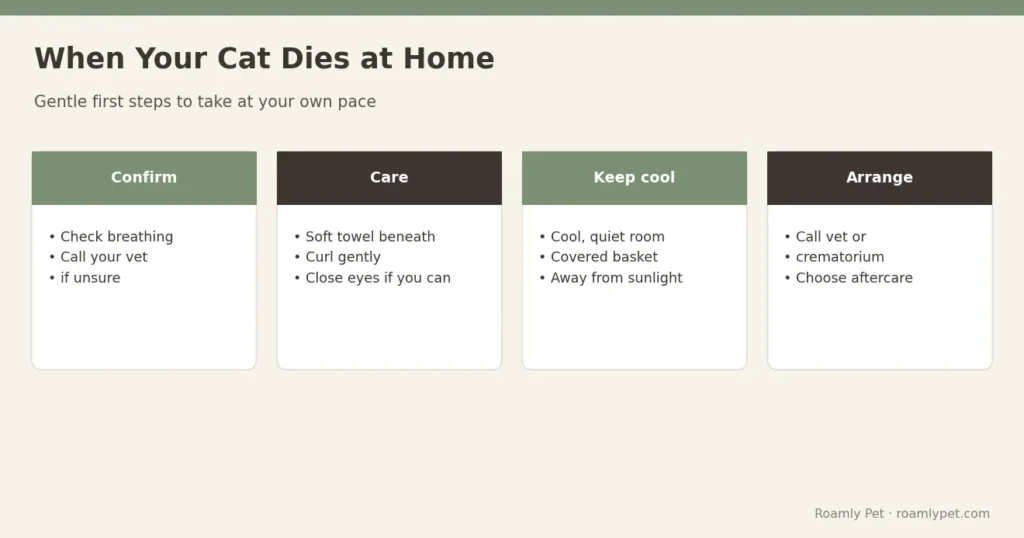
If your cat dies at home, call your vet if you are unsure they have passed. Lay your cat on a soft towel in a gently curled position, close their eyes if possible, and keep them somewhere cool. Then contact your vet or a pet crematorium to arrange collection, cremation or burial. Take things one step at a time.
Knowing what to do when your cat dies at home can feel impossible in the moment. Cats often slip away quietly, sometimes in a hidden corner, and finding them can be a deep shock even if you knew they were unwell.
This guide offers calm, practical steps for the first hours: confirming your cat has passed, caring for their body, who to contact, and the aftercare choices you have. Nothing here needs to be done in a rush. Read one step, take a breath, and come back to the next when you are ready. Your vet can help at every stage.
Why Cats Often Pass Quietly or Out of Sight
Many cats seek out quiet, enclosed places when they feel unwell or are near the end of life: under a bed, inside a wardrobe, behind furniture or in a favorite basket. This is a natural instinct, not a sign that they did not want your company or that you failed to notice.
If your cat was elderly or ill, you may have sensed changes in the days before. If the death was sudden, it may feel even harder to understand. Your vet can talk through any questions about what happened, which many owners find helpful in the weeks that follow.
What to Do When Your Cat Dies at Home: First, Confirm
If you have any doubt, call your vet or an emergency clinic straight away. Signs that a cat has died may include:
- no breathing or rise and fall of the chest
- no heartbeat you can feel on the left side of the chest
- eyes open and fixed, with no blink when touched near the corner
- no response to their name, touch or familiar sounds
These signs are not always easy to read, particularly if your cat is very still or curled up. A vet can confirm for you, either by phone guidance or by seeing your cat. Once you know, allow yourself a quiet moment before doing anything else.
Step 2: Gently Care for Your Cat’s Body
A cat’s body begins to stiffen within a few hours, so if you can, place them in a natural resting position soon after. Because cats are small, this is often easier to do than with a large dog, but it can still feel emotional.
- Lay a soft towel or blanket in a box, basket or their bed.
- Gently curl your cat on their side, with paws tucked as if sleeping.
- Close their eyes if you can; it is normal if they stay slightly open.
- Place an absorbent pad beneath them, as fluids may be released.
- Remove the collar and keep it, if you would like.
- Wear gloves if you prefer, and wash your hands afterwards.
Some families keep a small fur clipping or make a paw print before their cat leaves home. If that feels right, do it gently and only if you are comfortable.
Step 3: Keep Your Cat Somewhere Cool
While you make arrangements, place your cat in a cool room away from sunlight, radiators and other pets’ food areas. A covered box or basket lined with a blanket can feel peaceful and protects them from curious animals.
How long you can wait depends on the temperature. A few hours in a cool space is usually manageable, but in warm weather it is best to contact your vet or a crematorium as soon as you feel able. If you need more time, ask your vet, as many clinics can care for your cat until collection.
Step 4: Contact Your Vet or a Pet Crematorium
Your vet can confirm the death if needed, update your cat’s records and explain local aftercare. Many work with a pet crematorium and can arrange collection or ask you to bring your cat in. You can also contact a crematorium directly; some offer home collection and after-hours numbers.
You will usually be asked which type of cremation you would prefer. Private cremation means your cat is cremated alone and you receive only their ashes; partitioned and communal options differ. Our guide on how long pet cremation takes also explains what happens at each stage and when ashes usually come home.
Step 5: Choose Between Cremation and Burial
Cremation and burial are both loving choices. This table may help you compare them.
| Option | Why families choose it | Things to check |
|---|---|---|
| Private cremation | Keep, bury or scatter ashes later | Timing and what is included |
| Communal cremation | Simple, when ashes are not kept | Ashes usually not returned |
| Home burial | A resting place close to home | Local rules; depth and water sources |
| Burying ashes later | Flexibility if you move house | Local guidance; urn material |
| Pet cemetery | A dedicated, maintained place | Availability and fees |
Rules on burying a pet at home vary by country, state and local council, so check with your local authority first. Some families choose cremation and later bury the ashes in a biodegradable urn, which can be simpler. Our guide to burying pet ashes in your garden explains what to consider.
Helping Other Pets and Family Members
Other cats or dogs in the household may search for their companion, call out, or change their eating and sleeping patterns. Letting them see or sniff the body may help some animals, though reactions vary. Keep routines steady and offer extra gentle attention.
Children may have many questions, and simple, honest answers are usually kindest. Adults grieve differently too; one person may want to talk while another prefers quiet. Allow room for both.
Looking After Yourself
Cats are often quiet, constant companions, and their absence can be felt everywhere: an empty windowsill, a silent food bowl, no weight on the bed at night. Grief can come in waves and is a natural response to that loss.
Be kind to yourself and let people who understand support you. Friends, your vet or a pet-loss support line can help, and if grief feels overwhelming or does not ease, a counselor can offer support. Our article on coping with pet loss shares further ideas.
Finding a Fitting Urn
If you choose private cremation, you may later want a special place for your cat’s ashes. Roamly Pet makes solid wood and hand-glazed ceramic cat urns, and biodegradable salt urns for burial or water. Most styles can carry a free name-and-date engraving, optional photo laser-engraving or a cast paw print, and each is made or engraved to order and shipped within 3–5 business days. Our cat urn buying guide explains sizes and materials, and you are welcome to ask about sizing or engraving through our contact page.
Frequently Asked Questions
What should I do if I find my cat has died while I was out?
Take a moment, then call your vet if you are unsure. Gently move your cat onto a towel in a natural position and keep them somewhere cool. Many owners feel guilt at not being there, but cats often choose quiet moments to pass. Your vet can answer any questions about what happened.
How long can I keep my cat’s body at home?
In a cool room, a few hours is usually manageable while you make arrangements. Warm temperatures shorten this time, so contact your vet or a pet crematorium as soon as you feel able. If you need longer to say goodbye or gather family, ask your vet for advice on keeping your cat safely.
Can I bury my cat in the garden?
In many places it is possible, but local rules vary. Some areas set requirements about depth, distance from water and whether you own the land. Check with your local authority first. Some families prefer to cremate and later bury the ashes in a biodegradable urn, which can be simpler and easier to plan.
Will my other cat grieve?
Many cats show changes after losing a companion, such as searching, vocalizing, or eating and sleeping differently. Others seem less affected. Keep routines steady, offer comfort and play, and watch for changes that last more than a short while. If you are concerned about your other cat’s health, speak with your vet.
Should I get a paw print before my cat is collected?
If it feels right, a paw print can become a treasured keepsake. You can use ink pads designed for pets or a soft clay kit, pressing gently and wiping the paw afterwards. Some crematoriums and vets also offer paw prints as a service, so ask if you would rather not do it yourself.